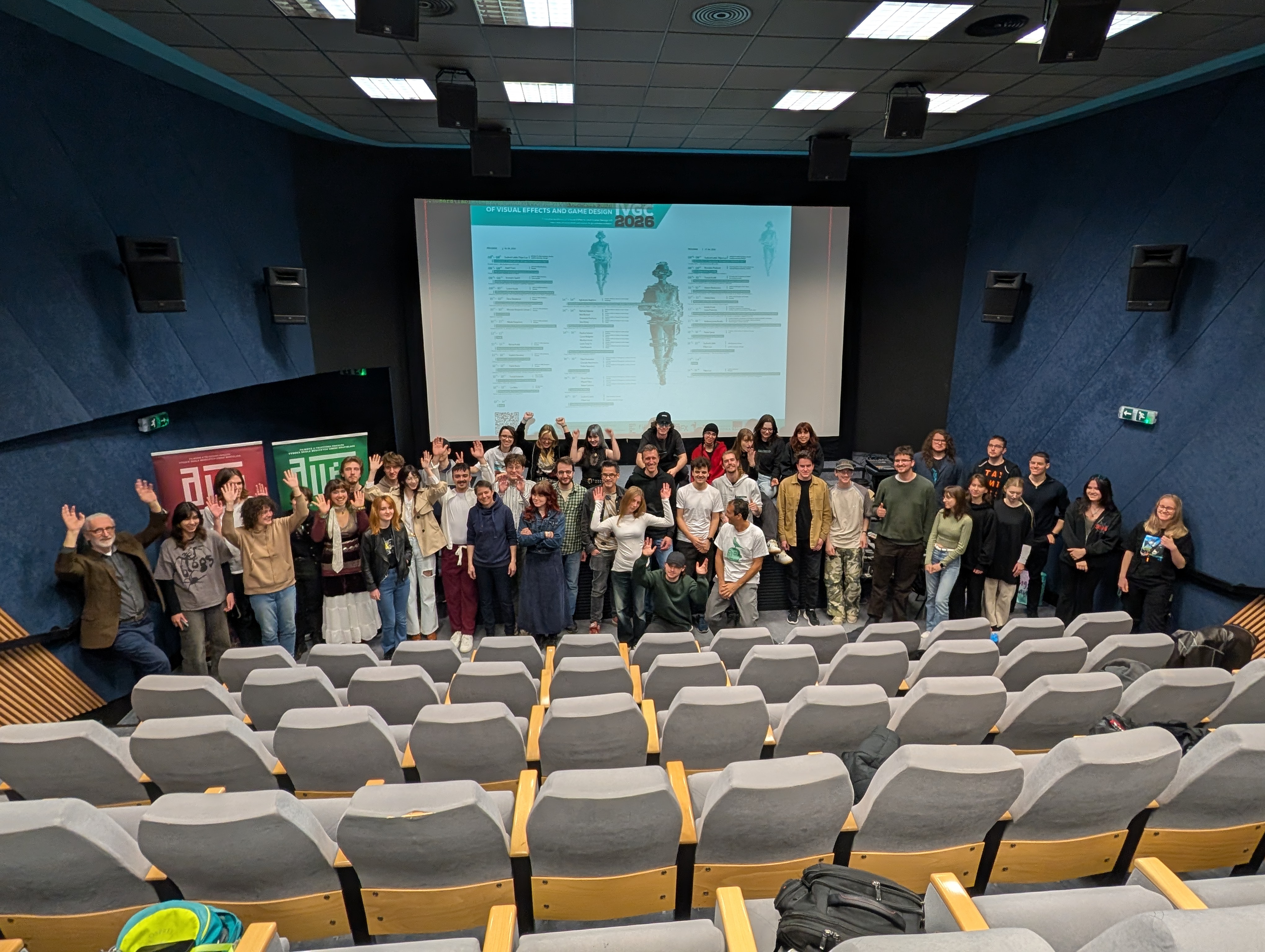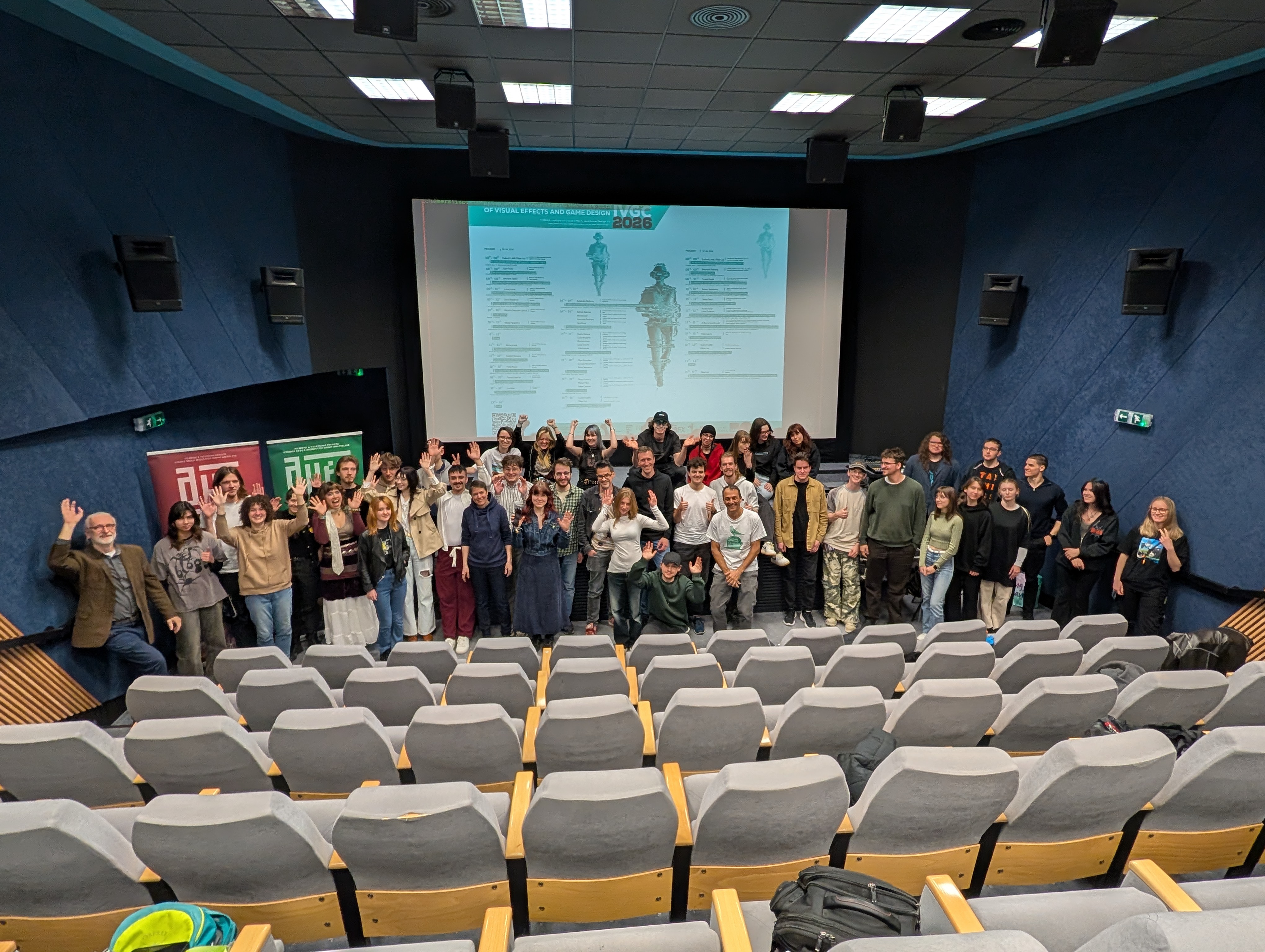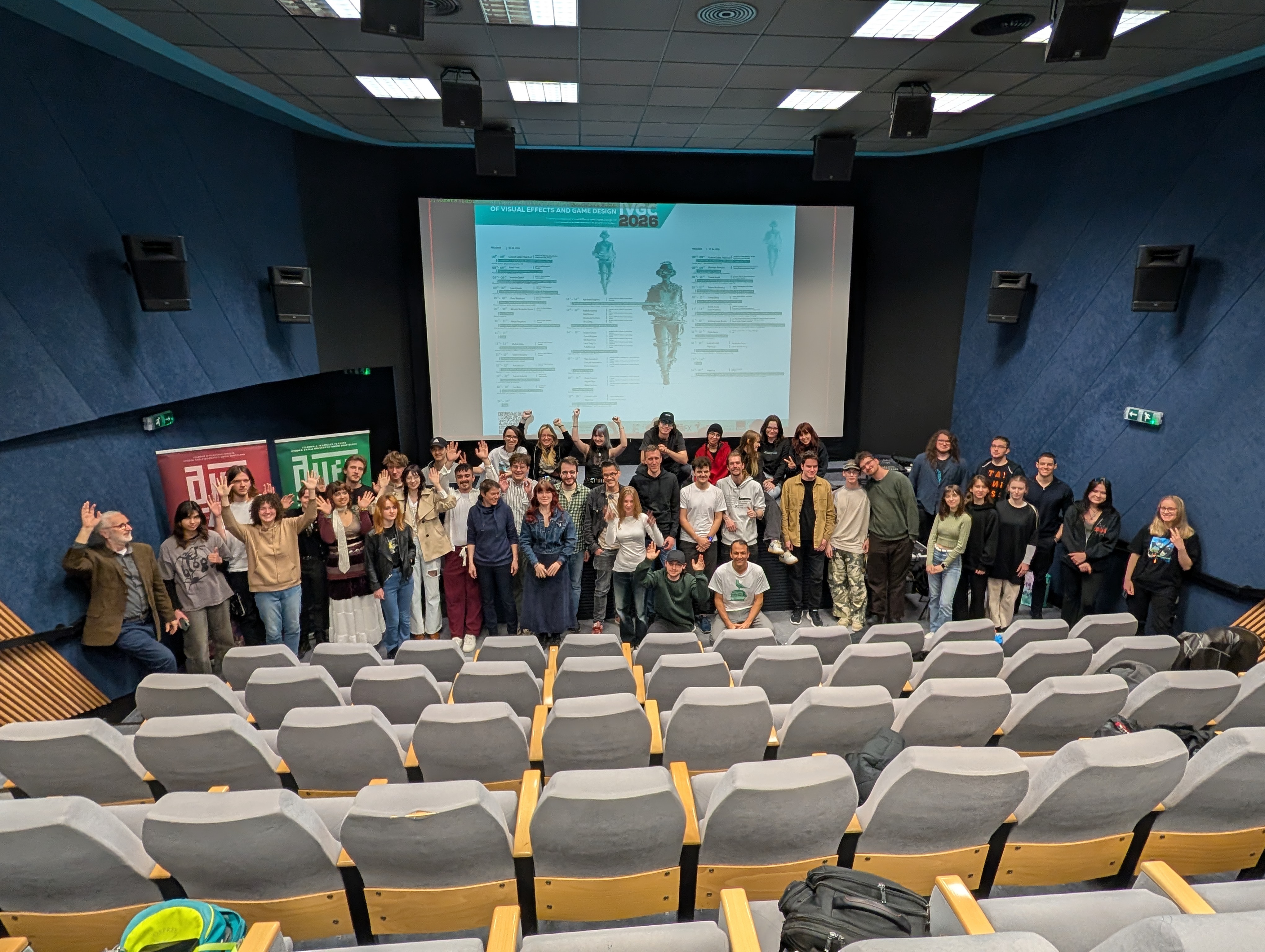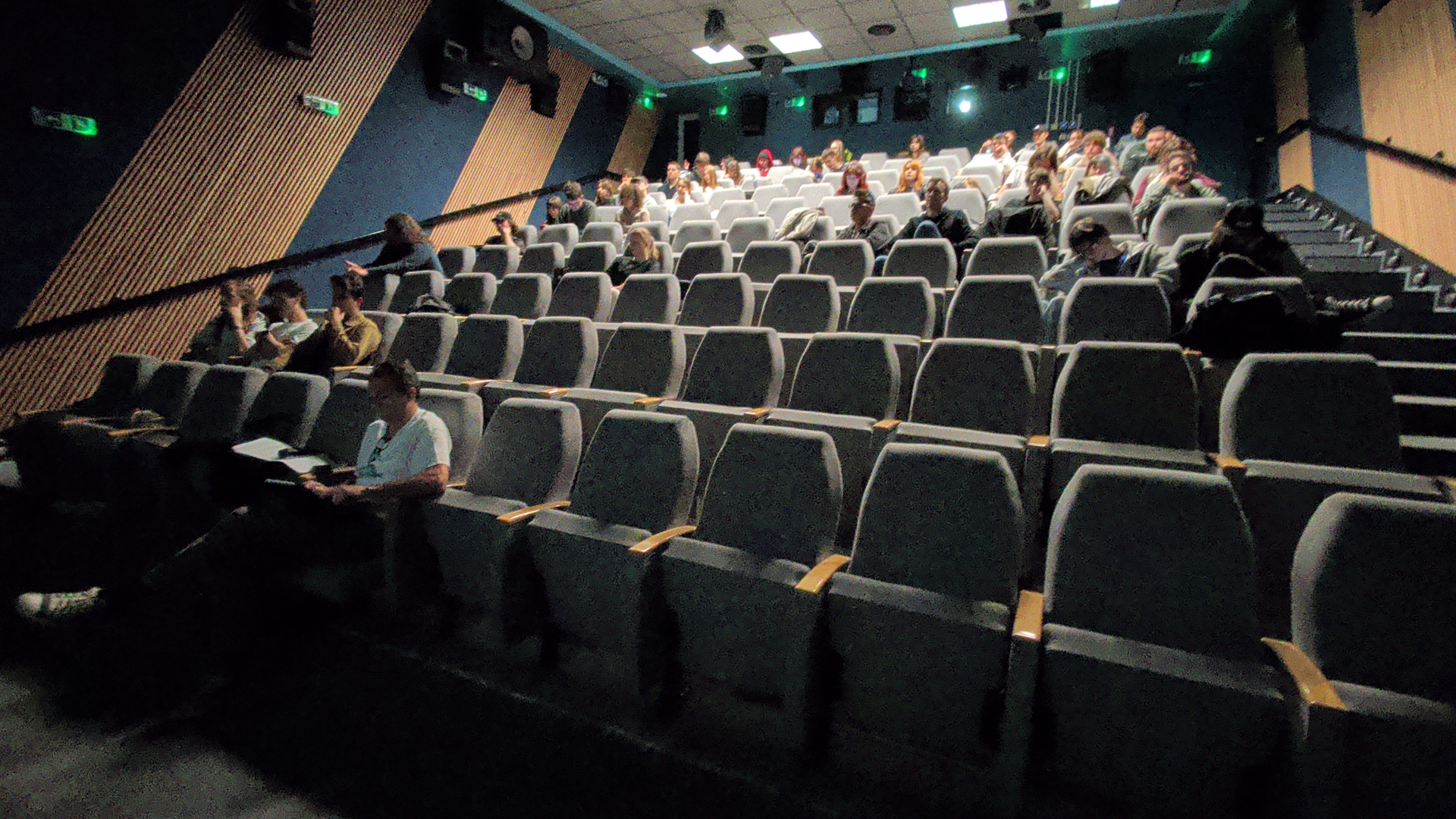

IVGC Bratislava 2026 - Visual Effects Transformations VII
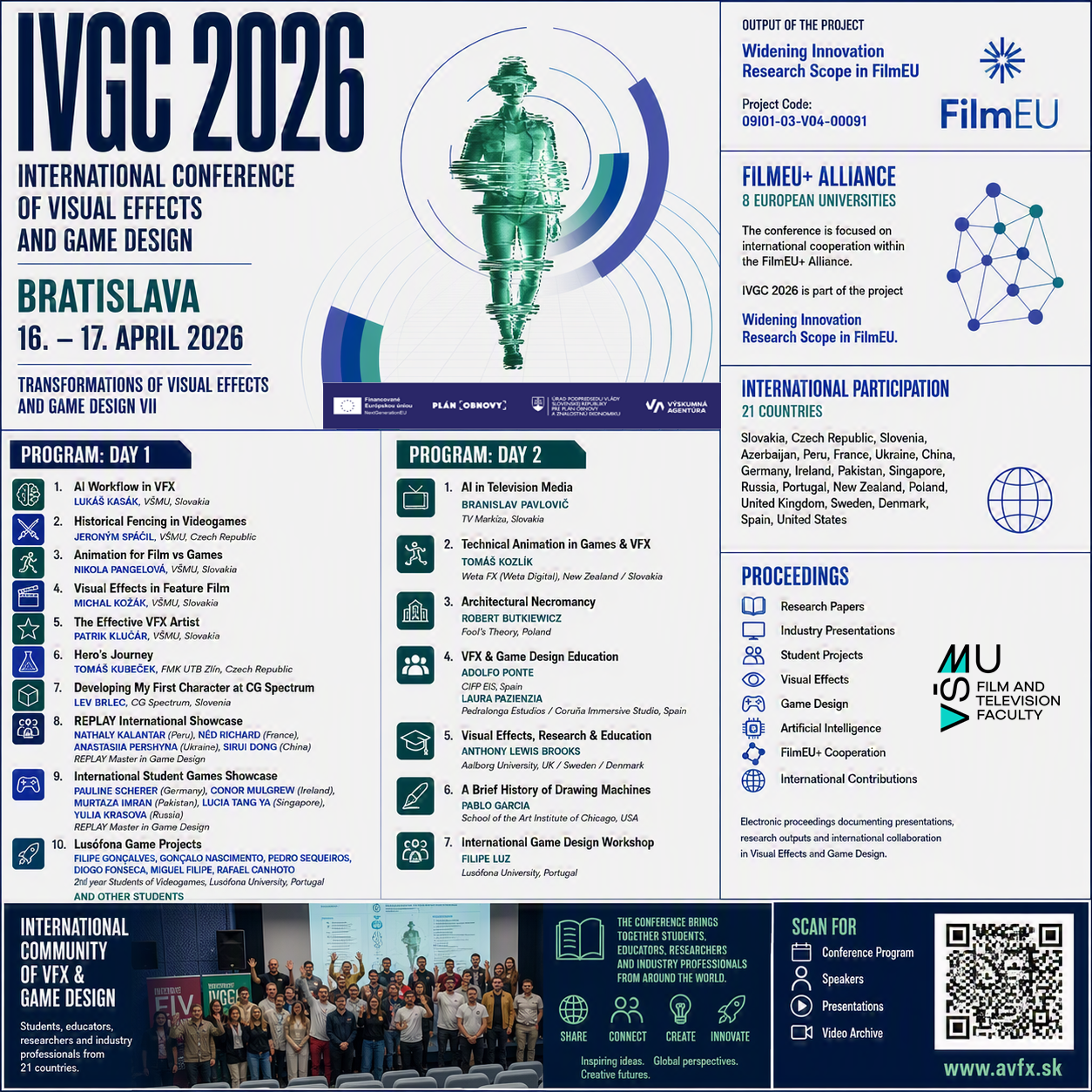
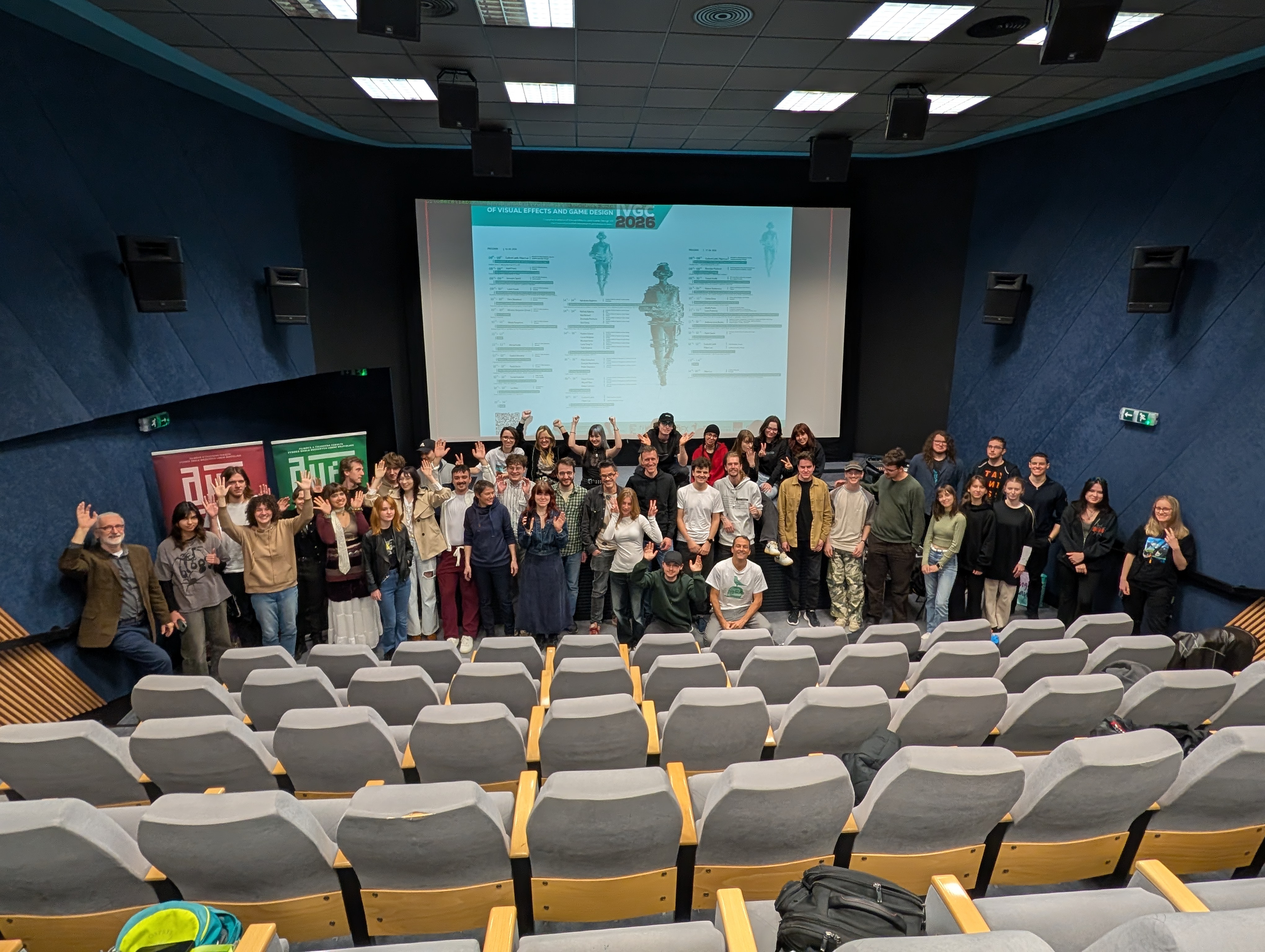
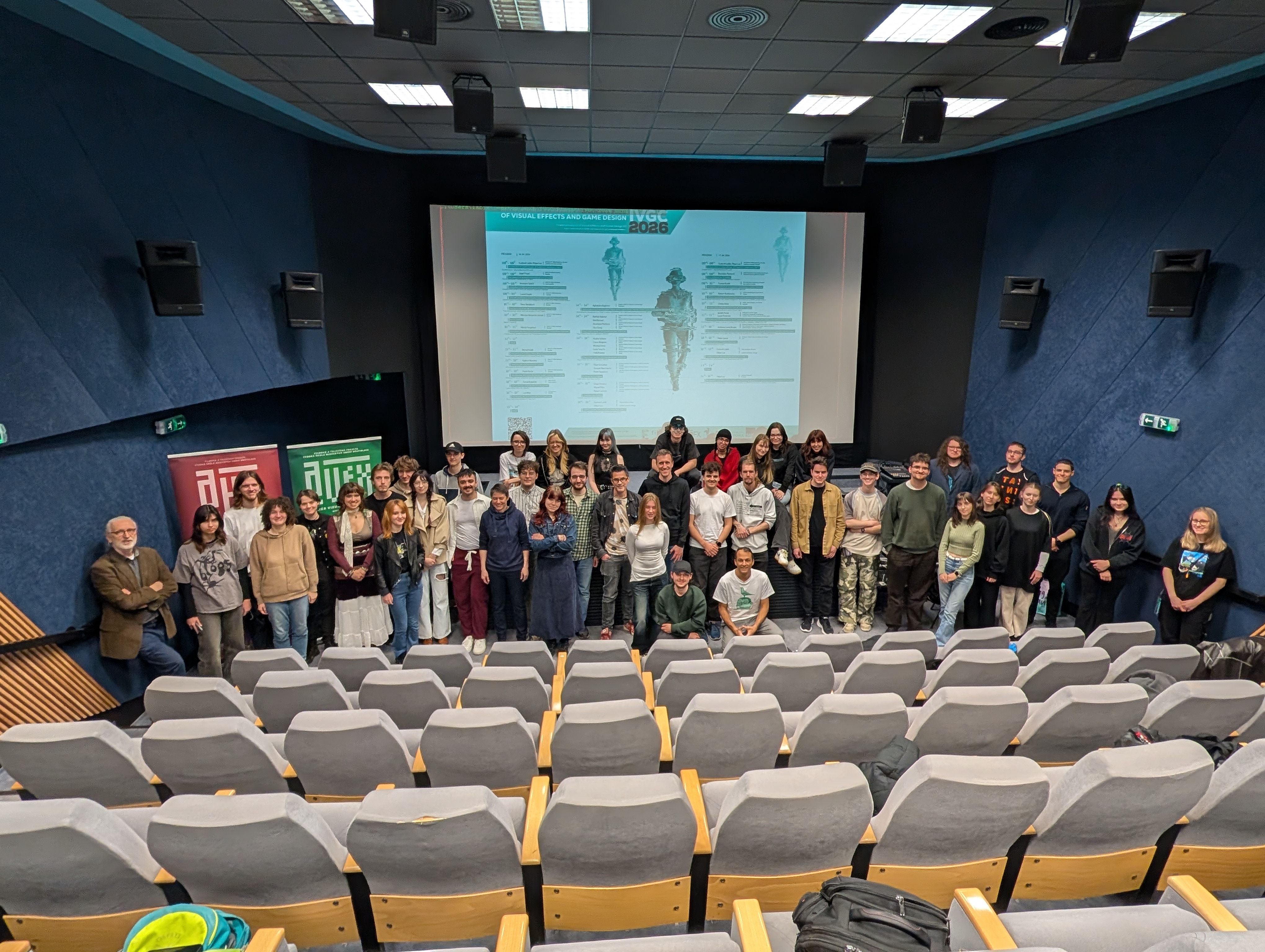
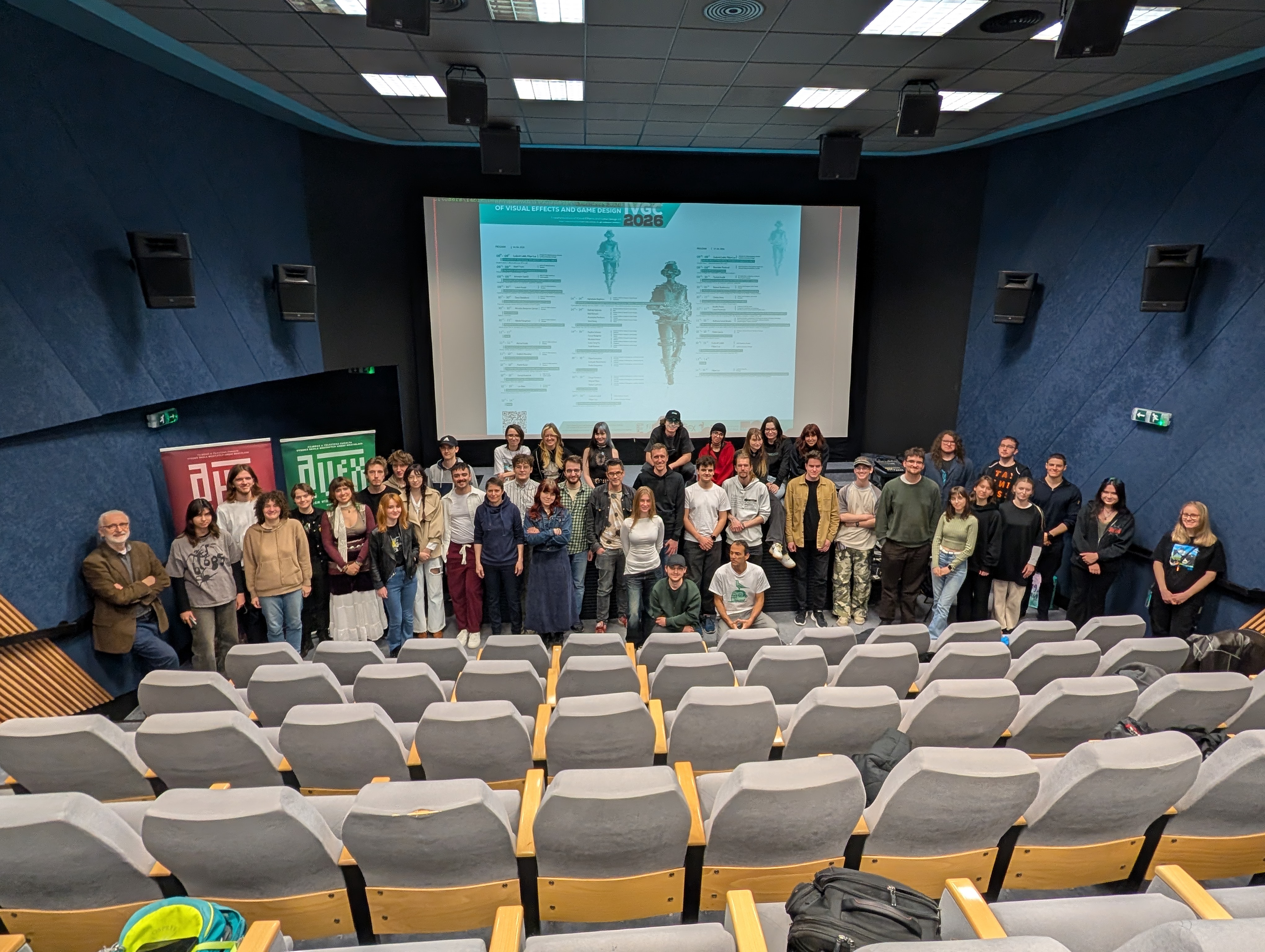
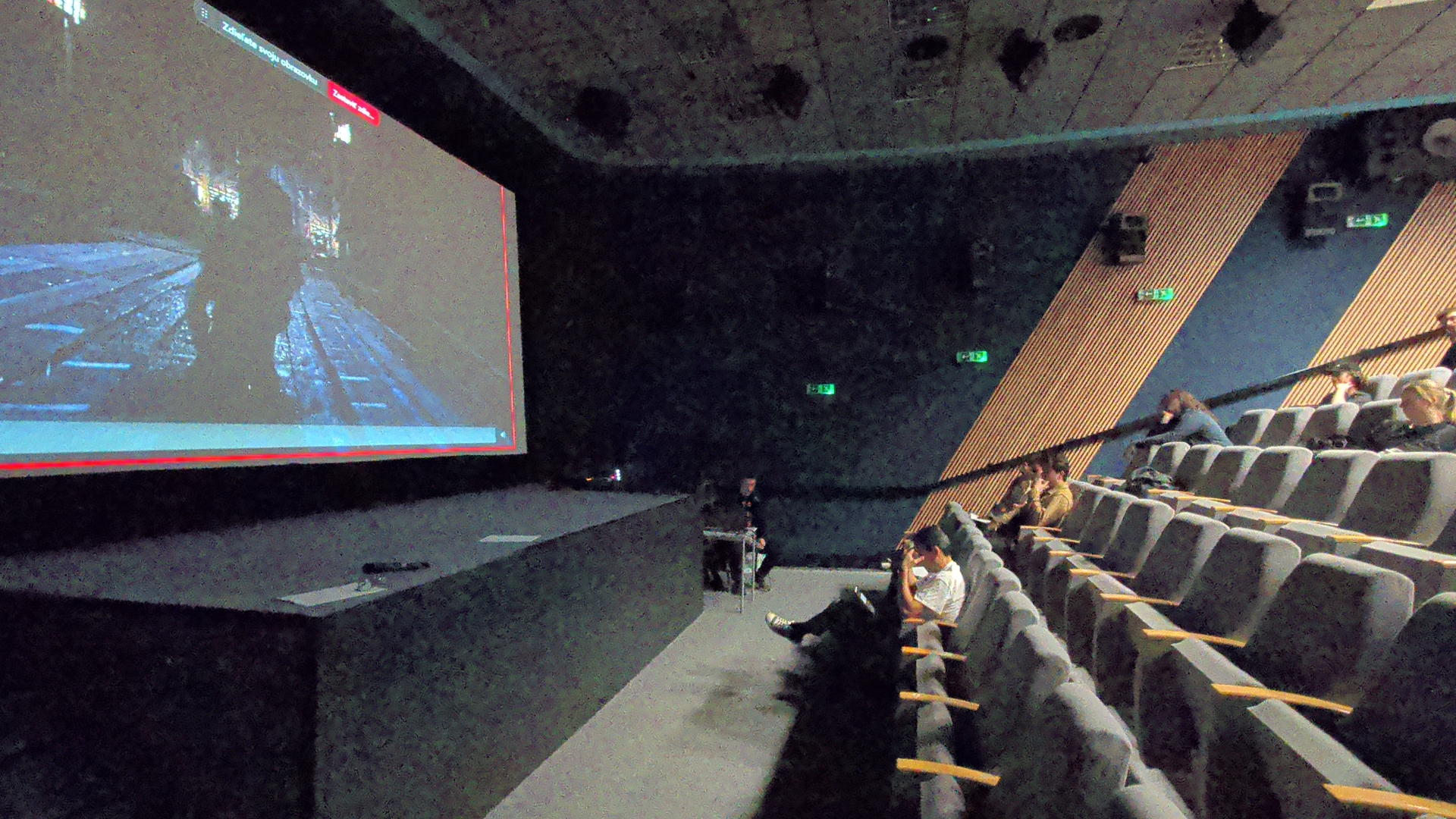
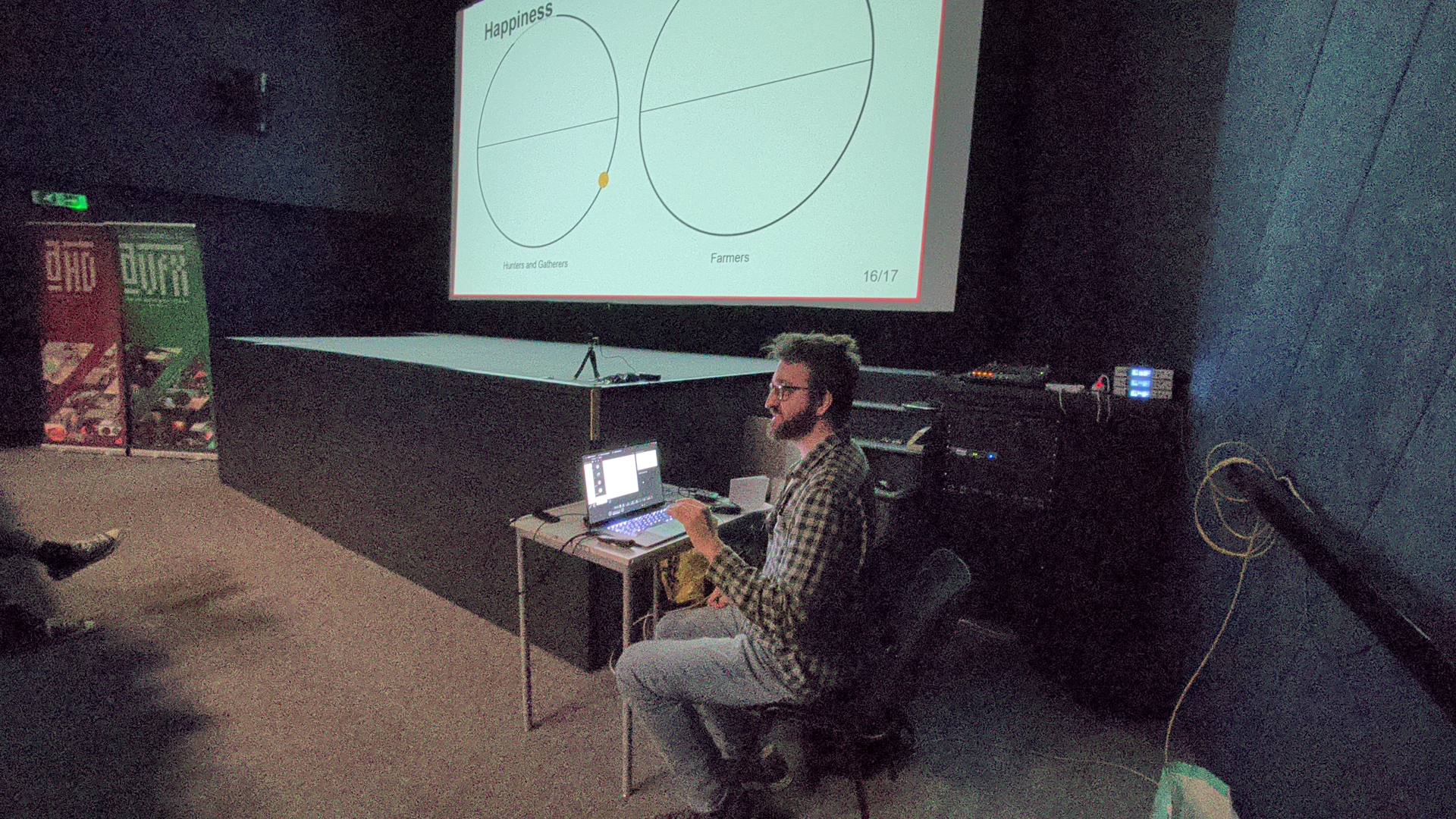
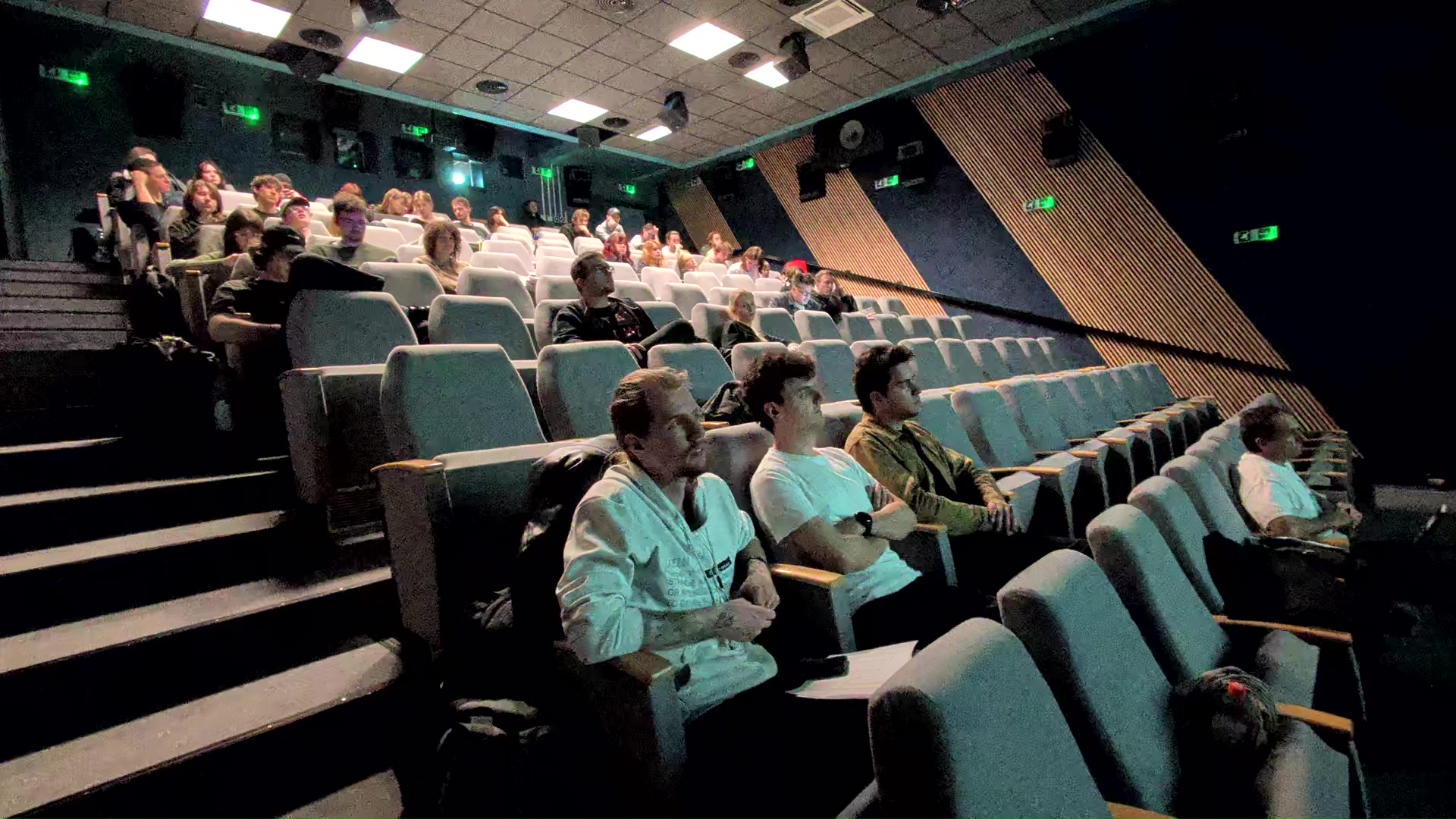
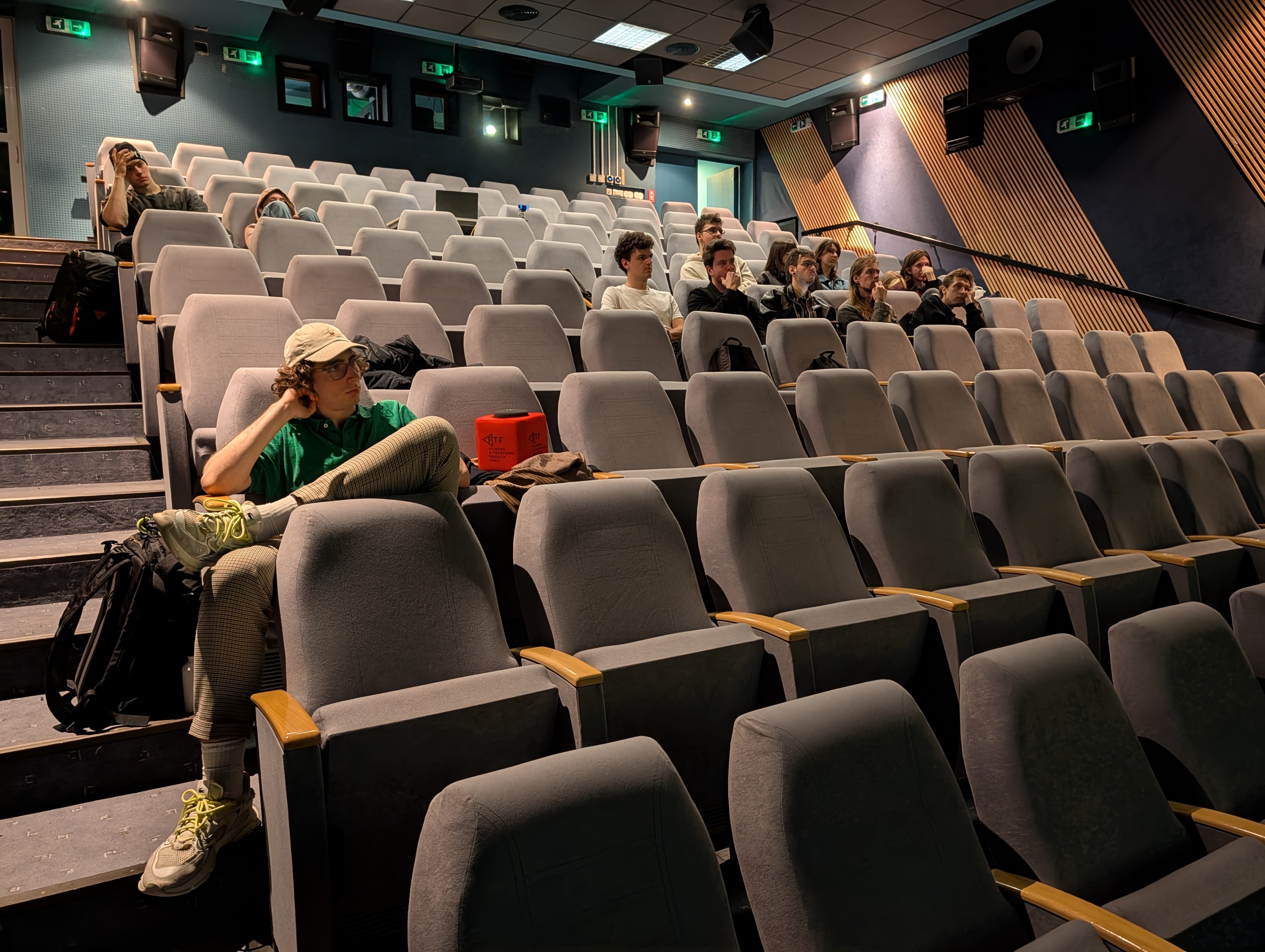
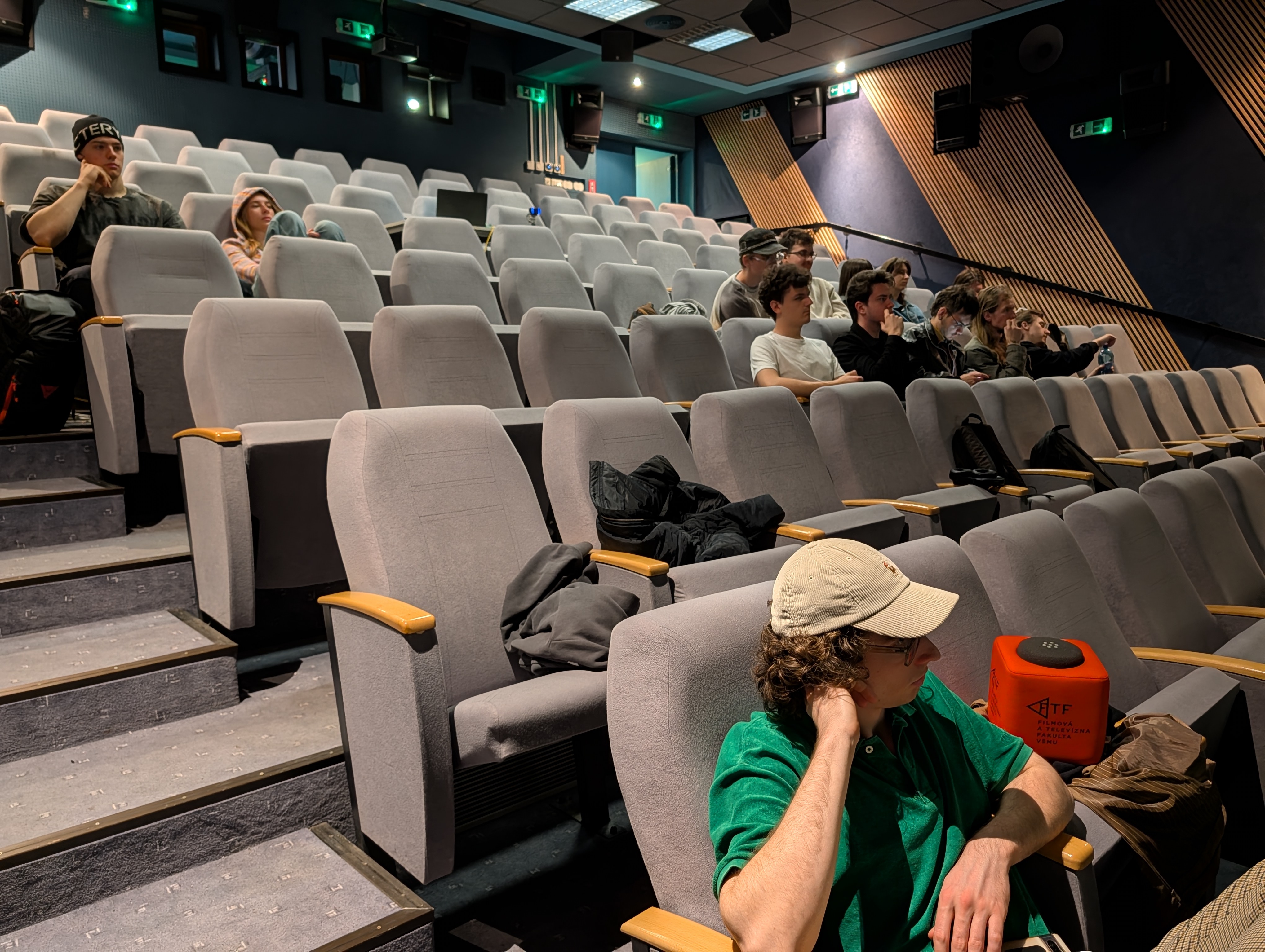
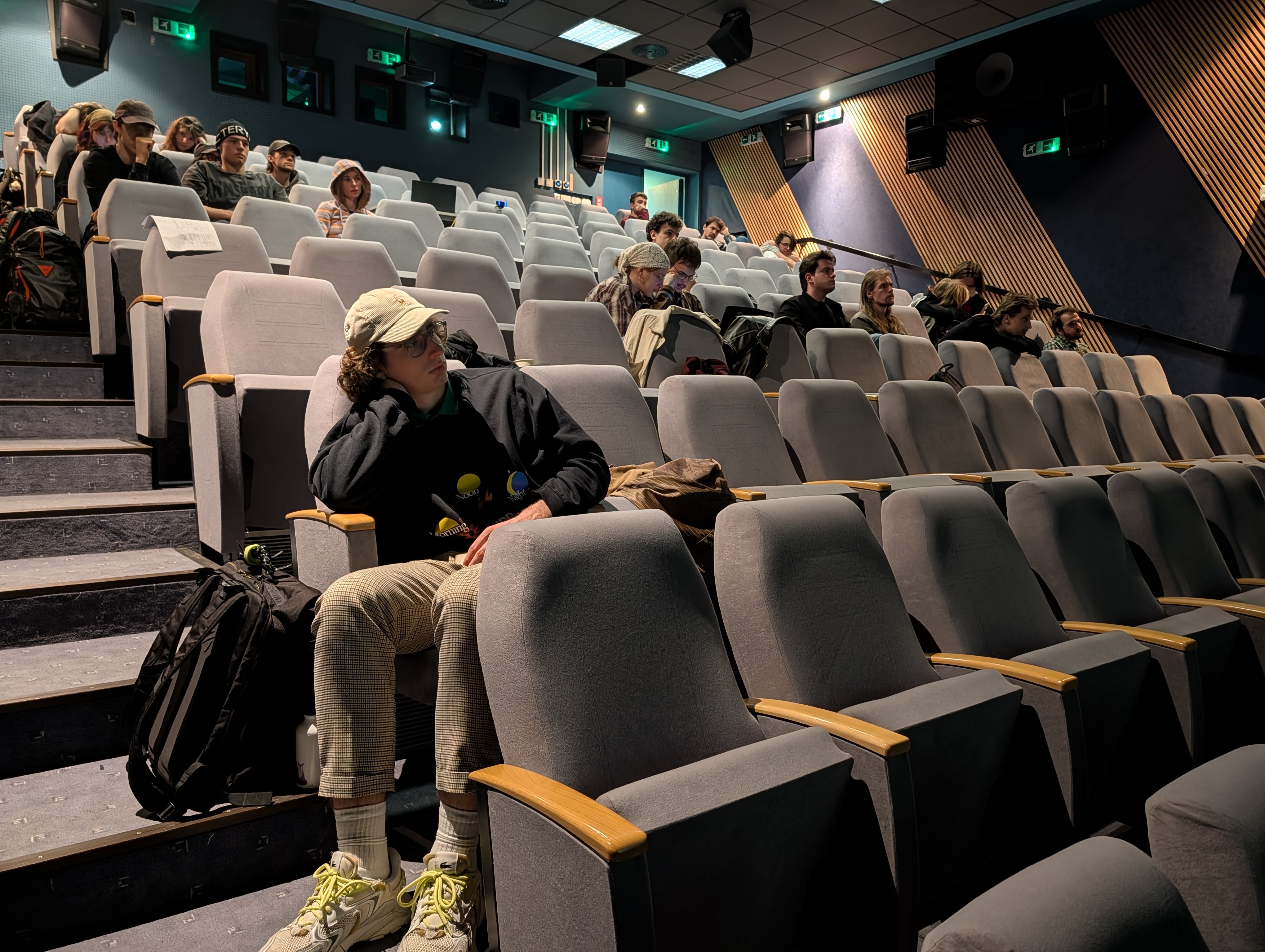
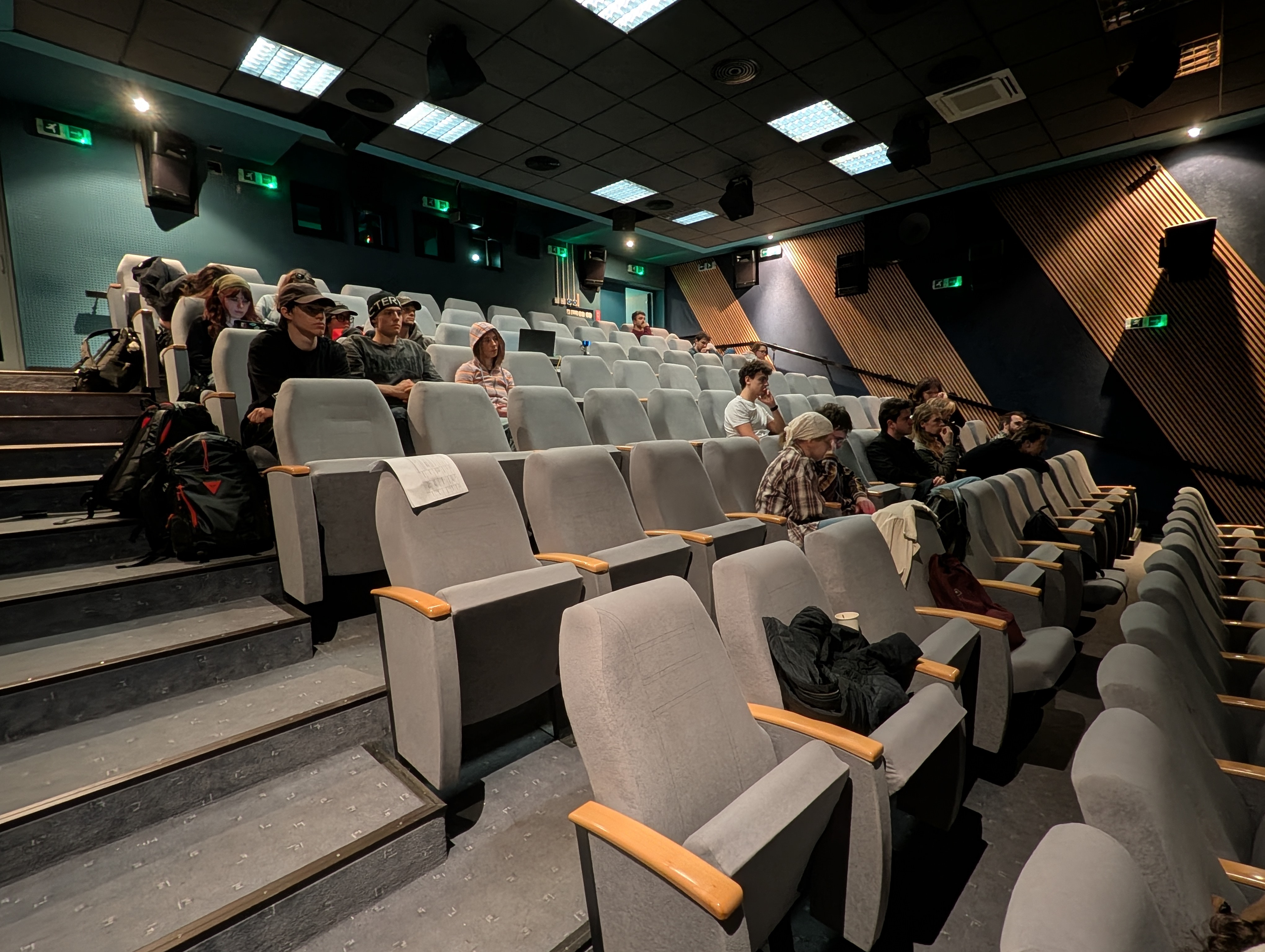
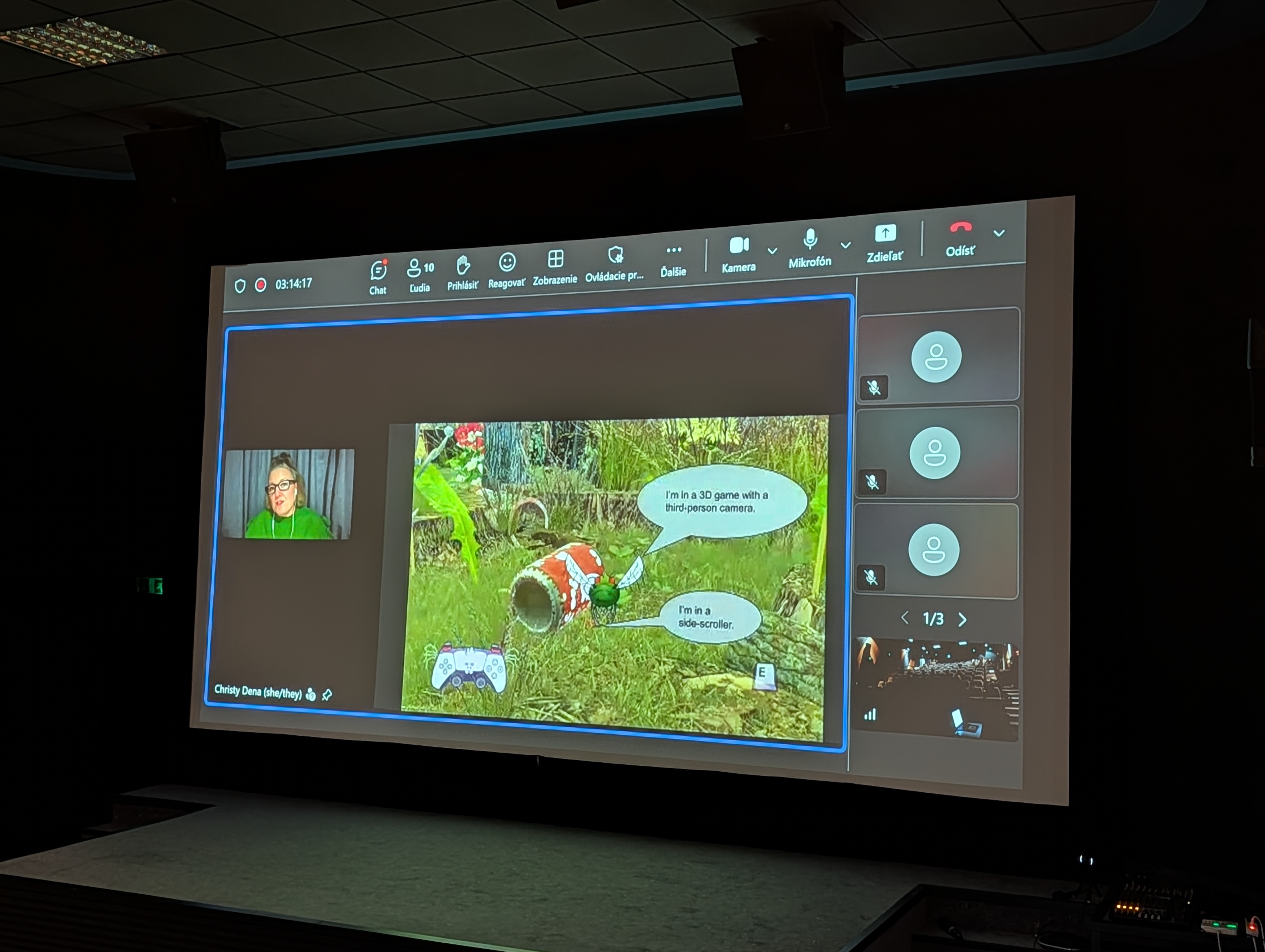
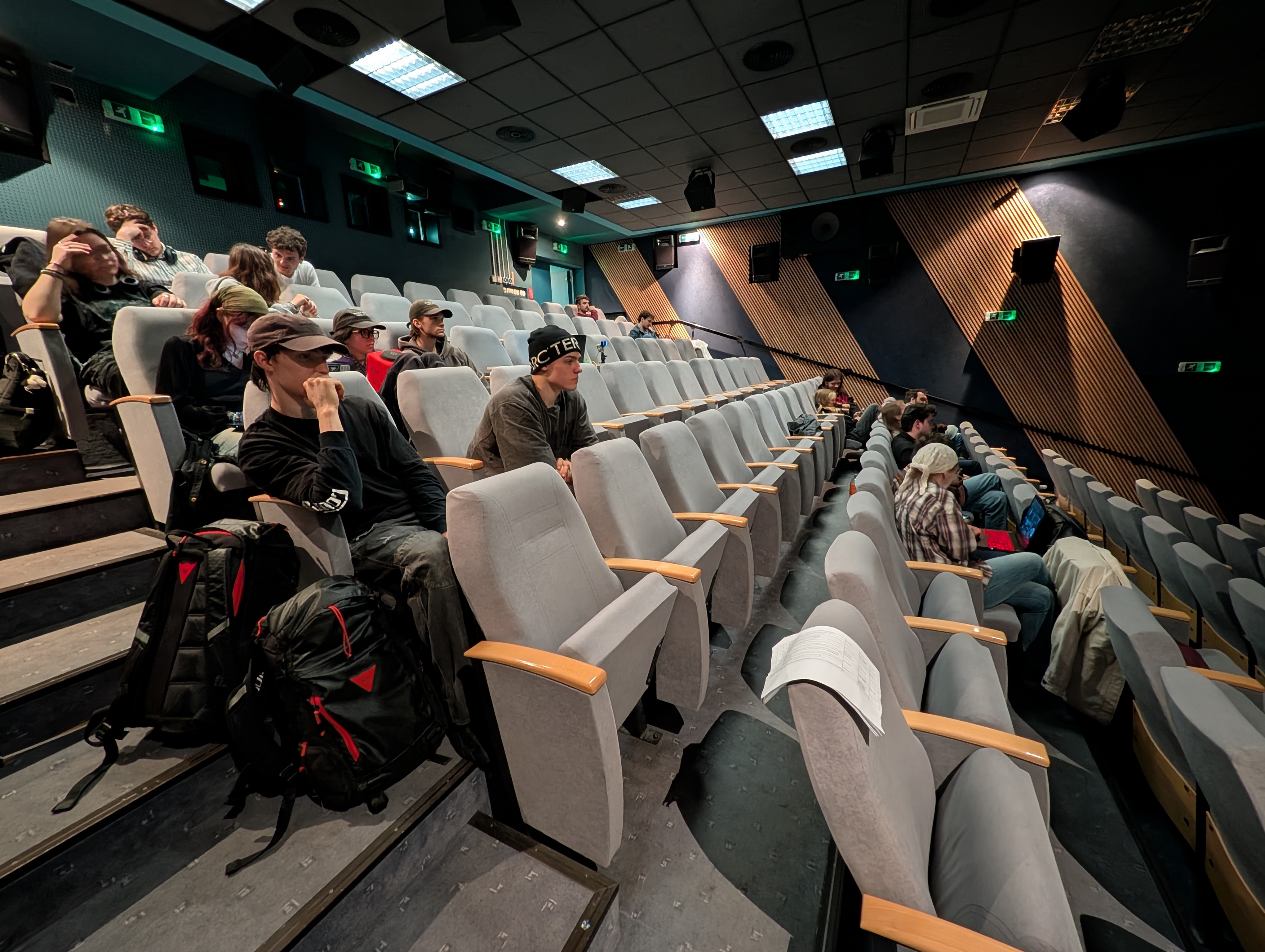
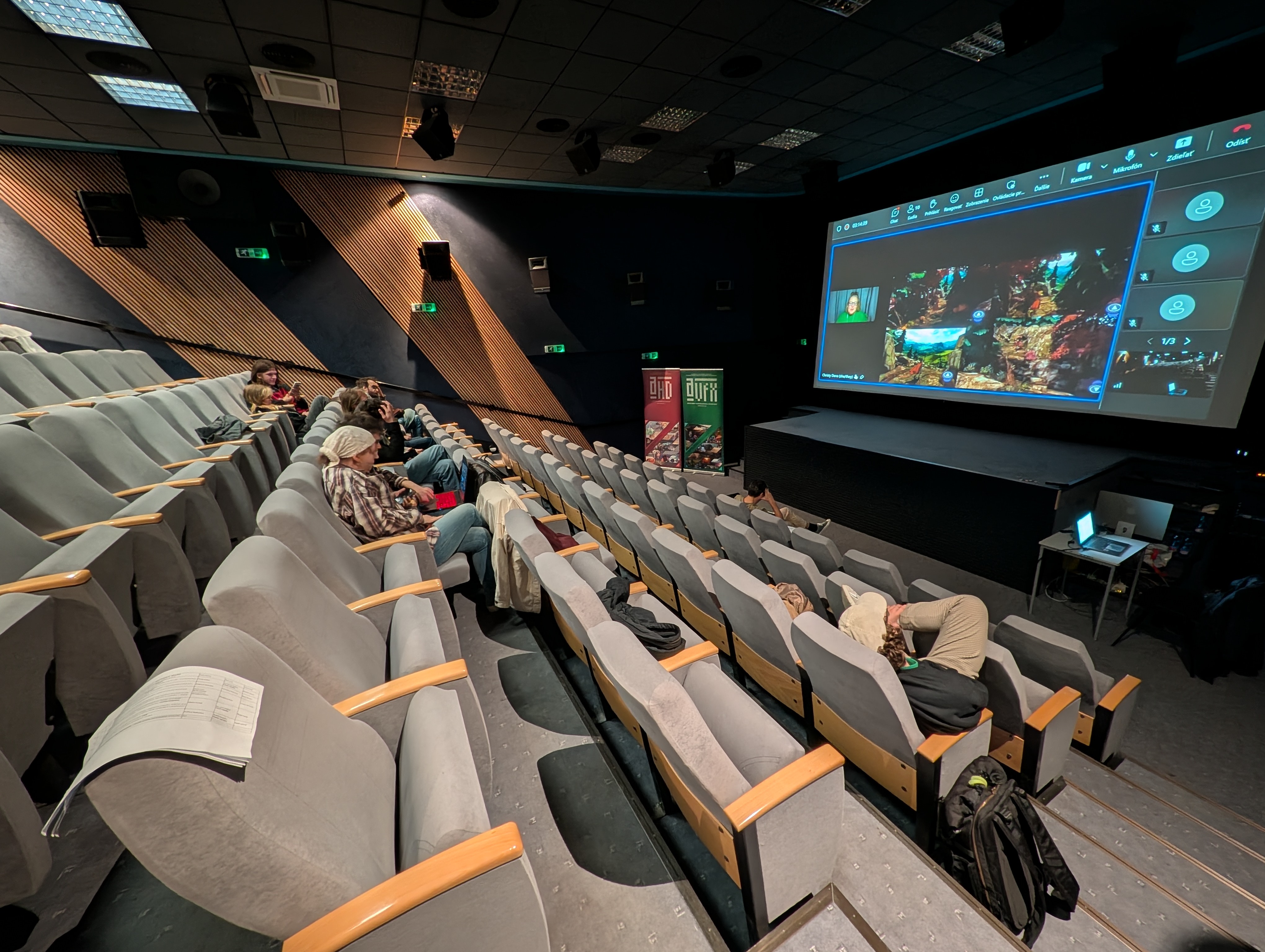
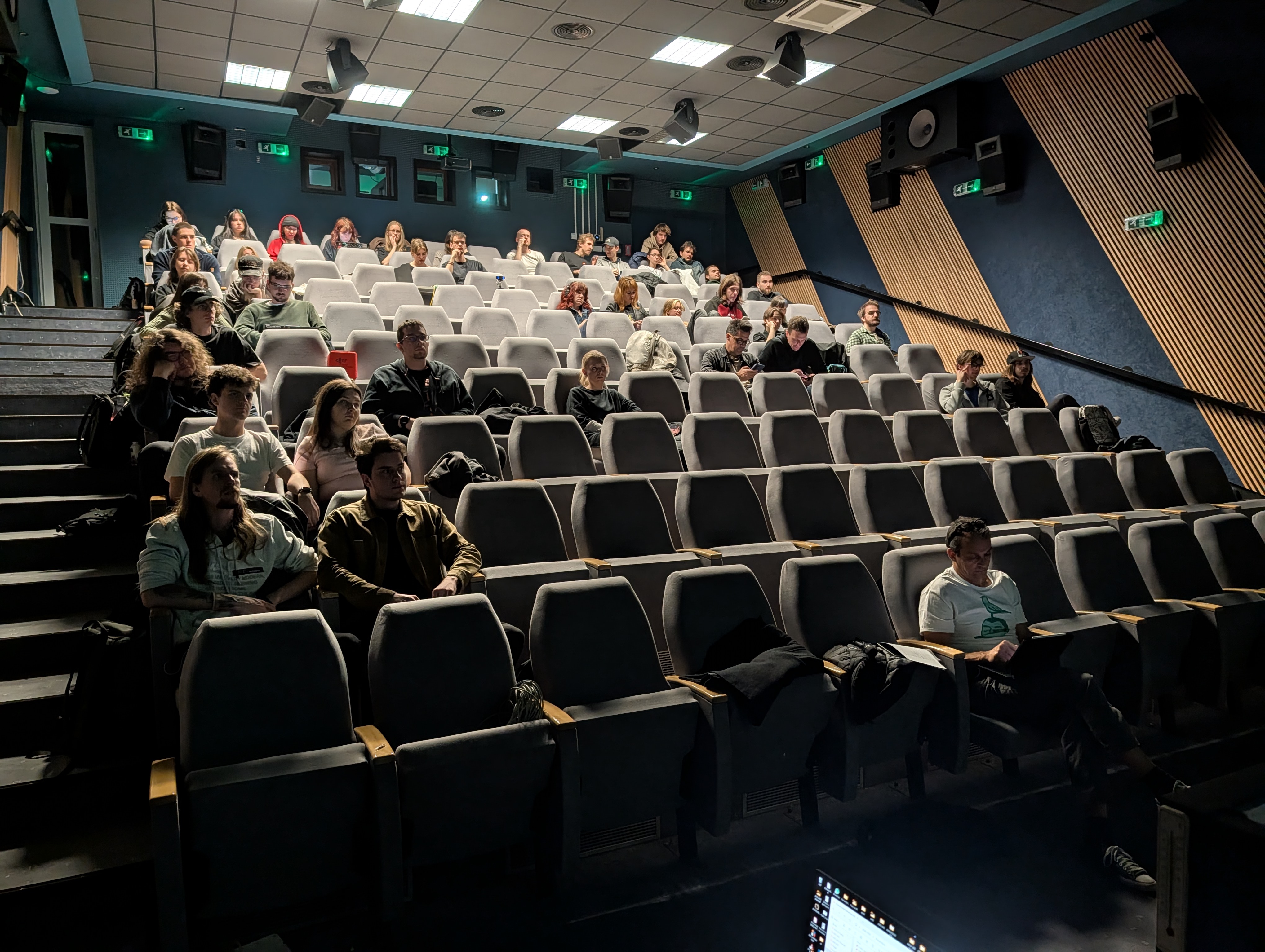
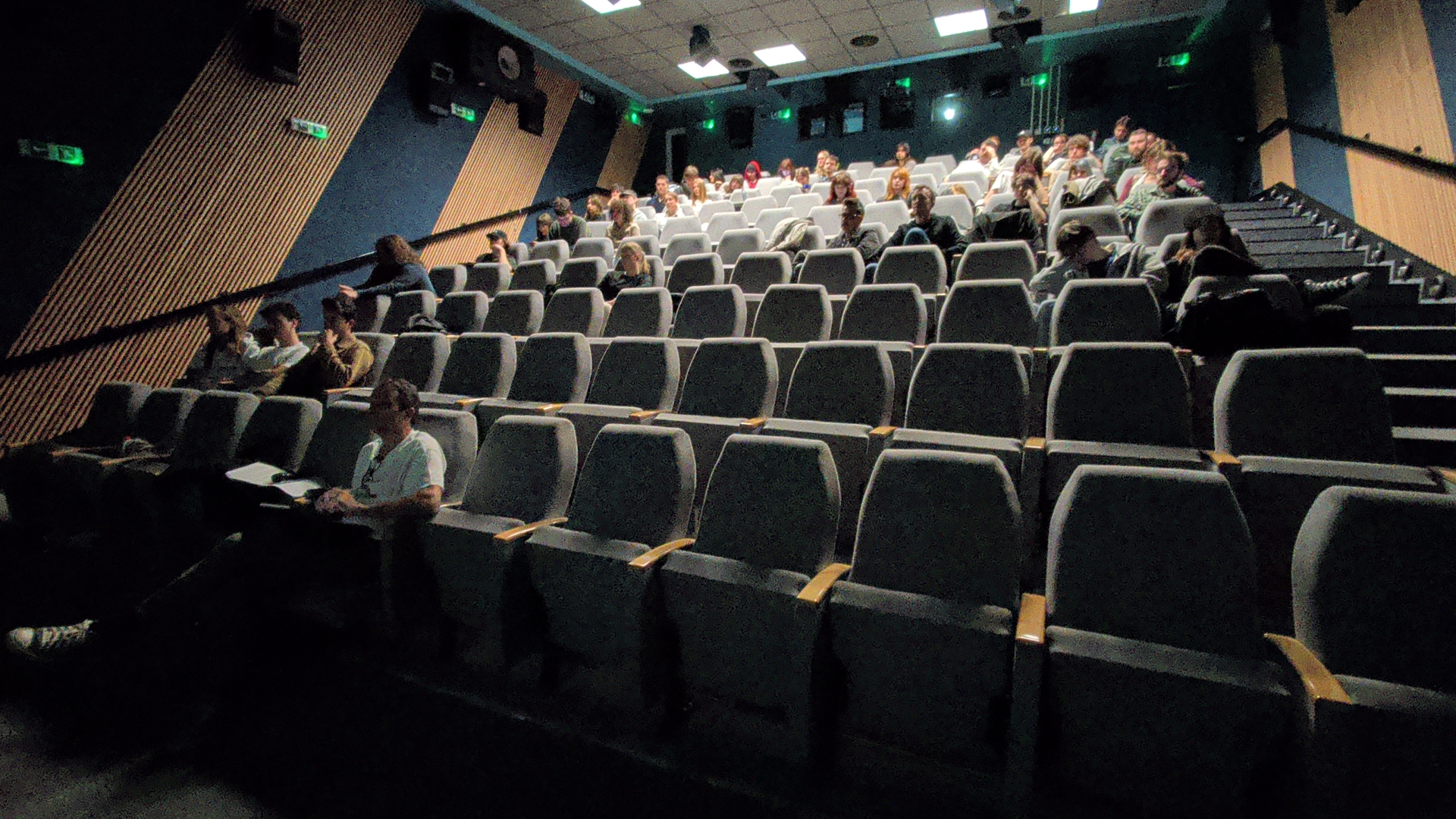
IVGC is a two-day international conference organized by the Visual Effects and Game Design Department of the Film and Television Faculty of the Academy of Music and Dramatic Arts in Bratislava every year in April. It is the 13th continuation of the VFX Department's activities in the search for the development of visual effects and the 7th continuation, which strives for an international level of interpreted scientific knowledge in VFX and GD. It takes place simultaneously as a face-to-face and distance meeting of students via video conference connection using the MS TEAMS program.
This year, IVGC took place on April 16-17, 2026.
The conference is intended primarily for students of VFX and GD study programs at schools operating in Europe, but also for external amateur or professional interested parties in both the domestic and international contexts.
The language of communication is English.
The task is to introduce participants, create opportunities for future collaborations, and inform not only participants but also any interested parties about the current level of VFX and GD in Europe.
The conference event is aimed at international collaborations between the FilmEU+ association of 8 European universities. IVGC is also part of the Widening Innovation Research Scope in FilmEU project.
Funded by the EU NextGenerationEU through the Recovery and Resilience Plan for Slovakia under the project No. 09I01-03-V04- 00091.

The presentations are recorded in the TEAMS program and the conference is streamed live on the YouTube channel.
After editing, individual video contributions are shared via the WEB pages: www.avfx.sk, www.ahd.avfx.sk and through the websites of participating foreign schools. The presentations are available to a wide professional public.
The conference is complemented by the production of an electronic written document, the IVGC 2026 Proceedings, which is a written visual recording of the individual presentations of both conference days. The Proceedings also include contributions that were not presented at the videoconference presentations, but are an important perspective on the professional and pedagogical environment of VFX and GD in the world.
Countries represented: Slovakia, Czech Republic, Slovenia, Azerbaijan, Peru, France, Ukraine, China, Germany, Ireland, Pakistan, Singapore, Russia, Portugal, New Zealand, Poland, United Kingdom, Sweden, Denmark, Netherlands, Spain, USA...
Program: DAY 1
| 9:00 | 9:15 | Ľudovít Labík, Filipe Luz - Introduction of International VFX and GD Conference, Day 1 |
| 9:15 | 9:35 | Jozef Fruni, student of VFX, FTF VŠMU, Slovakia. The process of gradual improvement of a 3D mesh - Proces postupného vylepšovania 3D siete |
| 9:35 | 9:55 | Jeroným Spáčil, student of GD, FTF VŠMU, Czech republic. Integration of Historical Fencing into Videogame Combat Systems - Integrácia historického šermu do bojových systémov videohier |
| 9:55 | 10:15 | Lukáš Kasák, student of VFX, FTF VŠMU, Slovakia. Efficient workflow in the AI era: From script to final post-production - Efektívny pracovný postup v ére umelej inteligencie: Od scenára až po finálnu postprodukciu |
| 10:15 | 10:35 | Dana Sleziaková, student of GD, FTF VŠMU, Slovakia. Integration of Historical Fencing into Videogame Combat Systems - Integrácia historického šermu do bojových systémov videohier |
| 10:35 | 10:55 | Miroslav Benjamin Ujmiak, student of VFX, FTF VŠMU, Slovakia. Joy of creation - Radosť z tvorenia |
| 10:55 | 11:15 | Nikola Pangelová, student of GD, FTF VŠMU, Slovakia. Animation for Film vs Animation for Games: A Comparative Overview - Animácia pre film vs. animácia pre hry: Porovnávací prehľad |
| 11:15 | 11:35 | Refreshments |
| 11:35 | 11:55 | Michal Kožák, student of VFX, FTF VŠMU, Slovakia. The process of creating visual effects in a feature film - Proces tvorby vizuálnych efektov v celovečernom filme |
| 11:55 | 12:15 | Vojtěch Novotný, student of GD, FTF VŠMU, Czech republic. Depicting Mental Disorders in Games - Zobrazovanie duševných porúch v hrách |
| 12:15 | 12:35 | Patrik Klučár, student of VFX, FTF VŠMU, Slovakia. The Effective VFX Artist: Balancing Speed, Learning, and Sanity - Efektívny VFX tvorca: Vyváženie rýchlosti, učenia a zdravého rozumu |
| 12:35 | 12:55 | Tomáš Kubeček, PhD. student, FMK UTB Zlin, Czech republic. Hero´s Yourney - Cesta hrdinu |
| 12:55 | 13:15 | Lev Brlec, CG Centrum, Slovenia. Developing My First Character at CG Spectrum - Vývoj mojej prvej postavy v CG Spectrum |
| 13:15 | 14:15 | Refreshments |
| 14:15 | 14:35 | Aghababa Baghirov, Student of REPLAY Master in Game Design, Azerbaijan. Optimalization tools - Nástroje pre optimalizáciu |
| 14:35 | 15:15 | Students of REPLAY Master in Game Design: Nathaly Kalantar, Peru; Néd Richard, France; Anastasiia Pershyna, Ukraine; Sirui Dong, China Plug n'Panic: an Alt. Ctrl Game developed at REPLAY - Plug n'Panic: hra s Alt. Ctrl vyvinutá v REPLAY |
| 15:15 | 15:45 | Students of REPLAY Master in Game Design: Pauline Scherer, Germany, Conor Mulgrew, Ireland, Murtaza Imran, Pakistan, Lucia Tang Ya, Singapore, Yulia Krasova, Russia Nobody - Game developed at REPLAY - Nikto, hra vyvinutá v REPLAY |
| 15:45 | 16:05 | Filipe Gonçalves, Gonçalo Nascimento, Pedro Sequeiros, 2nd year Students of Videogames, Lusófona University, Portugal A Tough Act To Follow - Ťažký zákon, ktorý treba dodržať Diogo Fonseca, Miguel Filipe, Rafael Canhoto, 2nd year Students of Videogames, Lusófona University, Portugal Comically Safe NUKES! - Komicky bezpečné atómové zbrane! |
| 16:05 | 16:15 | Ľudovít Labík, Filipe Luz, special guest: Benedikt Salzbrunn (Fachhochschule Technikum Wien, Austria) - Closing remarks and Evaluation of the IVGC, Day 1 |
Program: DAY 2
| 9:00 | 9:15 | Ľudovít Labík, Filipe Luz - Introduction of International VFX and GD Conference, Day 2 |
| 9:15 | 9:45 | Branislav Pavlovič, Head of graphics in the creative department, Television Markíza, Slovakia Television Markíza: AI tools in the television post-production process - Televízia Markíza: AI nástroje v televíznom postprodukčnom procese |
| 9:45 | 10:15 | Tomáš Kozlík, Plan A Collective, ex-WetaFX, New Zealand, Slovakia Technical Animation in Games and VFX - Technická animácia v hrách a VFX |
| 10:15 | 10:45 | Robert Butkiewicz, Senior Level Designer, Fool’s Theory, Poland Architectural Necromancy-How The Thaumaturge Brought a Razed City to Life - Architektonická nekromancia-Ako taumaturg vdýchol život zničenému mestu |
| 10:45 | 11:15 | Christy Dena, writer, game designer, and scholar, Australia Asymmetrical Gameplay Using Visual, Audio, and Haptic Information - Asymetrická hrateľnosť s využitím vizuálnych, zvukových a haptických informácií |
| 11:15 | 11:45 | Adolfo Ponte, Professor at CIFP EIS, Spain Laura Pazienzia, Production Coordinator at Pedralonga Estudios, Head of Coruña Immersive Studio, Spain Introducing CIFP Imaxe e Son de A Coruña (CIFP EIS), philosophy, and results in the field of VFX and GD |
| 11:45 | 12:15 | Anthony Lewis Brooks, Professor Emeritus na Department of Architecture, Design and Media Technology, The Technical Faculty of IT and Design, Aalborg University, United Kingdom, Sweden, Denmark My history and perspectives on Visual Effects and Game Design aligned to Industry, Science, and Education - Moje skúsenosti a pohľady na vizuálne efekty a herný dizajn prepojené s priemyslom, vedou a vzdelávaním. |
| 12:15 | 12:45 | Pablo Garcia, profesor na School of the Art Institute of Chicago, USA A Brief History of Drawing Machines - Stručná história kresliacich strojov |
| 12:45 | 13:00 | Ľudovít Labík, Filipe Luz - Closing remarks and Evaluation of the IVGC, Day 2 |
| 13:00 | 14:00 | Refreshments |
| 14:00 | 16:00 | Filipe Luz - Workshop to introduce Game Design and international projects at Lusófona (private) University in Portugal |
Students and professionals presenting their topics
BIO
Anthony Lewis Brooks (Aalborg University, United Kingdom, Sweden, Denmark)
An acknowledged and celebrated eminent renowned emeritus professor whose profile sits between engineering, arts, sciences, technologies and the humanities. He is an inventor, visionary consultant, academic researcher, and international speaker.
He is a historical figure being the first to investigate interactive digital bespoke multimedia (audio and audio-effects, visuals and video-effects, video games, and robotics), both clinically and non-clinically, within healthcare, well-being, and (re)habilitation where his original multidimensional invisible sensing interface technologies were used. He was also amongst the first to use Artificial Reality, Virtual Reality, and Biofeedback/BCI in these research contexts.
He is the figurehead steering chair lead of the annual ArtsIT conference and community since 2009 when starting it under the European Alliance for Innovation (EAI - The World's largest open ICT society).
Keynotes (near 100) include at United Nations HQ New York; IBM HQ Armonk; and Xerox EU HQ Grenoble. His contributions across disciplines is considered avant-garde and pioneering. Brooks' research led to multi-million Euros funded projects by the European Commission and Danish Government, and led to industry start-ups, patents and commercial product, a new university education, and national/international research awards. A professionally developed research protocol is catalyst to the work alongside a developed intervention model. Publications amount to over 260 including 22 books.
ORCID profile
Pablo Garcia, (profesor na School of the Art Institute of Chicago, SAIC, USA)
His research-based creative practice explores and reframes historical artistic processes for a 21st-century audience. His work examines the intersection of forgotten analog methods and cutting-edge digital technologies, paying homage to centuries of human-machine collaboration in art and design. Through a multidisciplinary approach, he investigates art-and-technology relationships across site-specific installations, machine-assisted drawings, kinetic sculptures, optical illusions, speculative architectures, and original scholarship.
Since 2013, he has commercially produced the NeoLucida, a modern reinterpretation of the camera lucida. Initially designed as a media-archaeological research project, the device is now in the collections of international institutions such as the American Philosophical Society, the Yale Center for British Art, the Science Museum (London), the Polytechnic Museum (Moscow), and the Musée d'Art et d’Histoire (Geneva).
Garcia has taught at Carnegie Mellon University, the University of Michigan, Parsons The New School for Design, and has been a Visiting Scholar at the University of Cambridge. He has twice been named a Fulbright Scholar, and his extensive research on 600 years of drawing machines, documented at DrawingMachines.org, is supported by a National Endowment for the Humanities Fellowship. Garcia holds architecture degrees from Cornell University and Princeton University.
ORCID profile
Christy Dena, (writer, game designer, and scholar, Australia)
Known internationally for her pioneering work in transmedia storytelling and cross‑media narrative design. She holds a PhD from the University of Sydney and is recognized as one of the earliest theorists to define and formalize concepts such as transmedial fictions and cross‑platform narrative practice. Dena leads the creative studio Universe Creation 101 and has developed award‑winning interactive works, including the acclaimed digital narrative AUTHENTIC IN ALL CAPS. She has served as Digital Writer in Residence for the Australia Council for the Arts and contributes to higher education as a program leader and lecturer in creative industries. Her professional collaborations span organizations such as Cisco, Nokia, and the Australian Broadcasting Corporation. A member of the International Academy of Television Arts and Sciences, Dena frequently presents her research and creative work at international festivals and conferences, where she is recognized for advancing the theory and practice of multimodal and participatory storytelling.
https://en.wikipedia.org/wiki/Christy_Dena?utm_source=copilot.com
Robert Butkiewicz, (Senior Level Designer, Fool’s Theory, Poland)
Level designer with almost 8 years of experience in the video game industry. He currently works at Fool's Theory as a senior level designer and, during his career, contributed to projects such as The Wizards: Dark Times; The Thaumaturge; Silent Hill 2 Remake, and The Witcher Remake. Additionally, he is also involved in higher education, having graduated from a video game design programme at the University of Silesia's Faculty of Humanities, where he has been teaching level design since 2022. His guiding philosophy in level design is that the discipline is, first and foremost, an exercise in influencing human psychology and behaviour through the medium of space.
https://theorg.com/org/fools-theory/org-chart/robert-butkiewicz
Adolfo Ponte, (Professor at CIFP EIS, Spain)
A professor at CIFP Escola de Imaxe e Son in A Coruña, one of Galicia’s leading audiovisual training institutions. He specializes in technical production, lighting design, and the practical aspects of media creation. Ponte guides students through hands‑on learning in film, television, and live‑event environments. His teaching emphasizes real‑world skills and industry‑standard workflows. He actively collaborates on school projects and contributes to the development of innovative audiovisual curricula. Ponte is recognized within Galicia’s vocational education network for his commitment to applied learning. He continues to support the growth of new talent in the region’s creative industries.
Laura Pazienzia, (Production Coordinator at Pedralonga Estudios, Head of Coruña Immersive Studio, Spain)
She oversees audiovisual project workflows and supports high‑level production planning and serves as Head of Coruña Immersive Studio, a creative space dedicated to immersive media and emerging technologies. Her work bridges traditional film production with innovative digital environments. Pazienza leads multidisciplinary teams and ensures smooth coordination across technical and artistic departments. She is known for her organizational precision and her ability to manage complex production pipelines. Through her leadership, Coruña Immersive Studio contributes to the growth of immersive storytelling in Galicia. She remains an active force in Spain’s evolving audiovisual and XR ecosystem.
Tomáš Kozlík, (Weta FX, Weta Digital, New Zealand, Slovakia)
CG animator specialised in editing motion capture animations. He studied classical animation at the Tomas Bata University in Zlin and 3D Computer animation through the Animation Mentor online school.
His career started in video games, where he worked on Mafia III, Kingdom Come: Deliverance, Quantum Break and Red Dead Redemption 2.
He then switched industries to work in VFX at WetaFX. You can find his animations in Alita: Battle Angel, Avengers: Endgame, Kingdom of the Planet of the Apes or Avatar 2 and 3, among others.
He now works as the Animation Director at Plan A Collective, where he merges his passion for animation with his technical knowledge.
https://www.tomaskozlik.com/
Branislav Pavlovič, (Head of graphics in the creative department, Television Markíza, Slovakia)
Branislav has more than 20 years of experience in the television industry, having spent 18 years at TV Markíza, where he currently leads the television graphics department. He specializes in motion graphics and VFX post-production, which are not only his profession but also a long-standing passion. Throughout his career, he has contributed to the creation of visuals for a wide range of television projects and campaigns. In his work, he combines technology with creativity and focuses on strong and functional visual design.
Filipe Soares Branco da Costa Luz, (Lusófona University, Portugal)
Filipe Soares Branco da Costa Luz is an Associate Professor at Universidade Lusófona in Lisbon, working at the School of Communication, Architecture, Arts and Information Technologies. He holds a PhD in Communication Sciences from the New University of Lisbon and has long been involved in teaching digital post‑production for film, television, games, and animation. He currently serves as the Director of the Erasmus Mundus Joint Master Degree REPLAY, the Director of the MSc program Game Design and Playable Media, and the coordinator of the Videogames bachelor program. He is also the Vice‑Director of the Communication Design BA and a member of the leadership team of HEI‑Lab – Digital Human Environment Interface Labs. Luz is an active researcher in MovLab and HEI‑Lab, working with technologies such as motion capture, virtual reality, alternative controllers, and stereoscopic photography. He also serves as an external evaluator for the PhD program Performative and Media‑based Practices at the Stockholm University of the Arts. He is the principal investigator and co‑investigator of several international projects, including RE_PLAY, EPIC‑WE, and GameIn. His professional work bridges academic research, multimedia technologies, and the creative industries, while also supervising master’s and doctoral students.
Ľudovít Labík (Prof. Mgr. ArtD. the Head of the Department of Visual Effects and Game Design at the Film and Television Faculty of the Academy of Performing Arts (VŠMU) in Bratislava, Slovakia)
He has been teaching at the faculty since 1986 and is regarded as one of its most influential figures. He is the founder of the AVFX Department (2011), the founder of the Game Design Department (2019), the co‑founder of the Editing Department (1995), the author of the first digital film editing system in Slovakia (1986), and the founder of the FTF VŠMU website (2005).
For sixteen years, he taught at the Faculty of Multimedia Communications at Tomas Bata University in Zlín, Czech Republic, and he has also lectured at the Film School in Katowice, Poland. He is a member of the accreditation commission at the Academy of Arts in Banská Bystrica, contributing to the development of academic standards in film and media education.
He is the author and creator of the Summer School of Film Language, which has already reached its 20th edition, as well as the Further Education in Film Language. He has long served as a doctoral supervisor in the fields of visual effects, game design, editing, and dramaturgy.
Labík is the main organizer and editor of the international IVGC – International Visual Effects and Game Design Conference, which he has led since 2021. He is an active member of professional committees, juries, and accreditation boards, including the CILECT Developing Technologies Standing Committee.
As an educator and expert, he has contributed to hundreds of student films and dozens of professional productions. He worked as a dramaturg on films such as Alaska Kid, Wolves, Únos, Smečka, and Hore je nebo, v doline som ja. He is the author of several scholarly publications, including the monograph Dramaturgy of Film Editing (2013).
His work also includes extensive videomapping projects for White Night and other cultural events, involving dozens of students from all three faculties of VŠMU. Labík is considered one of the key figures shaping modern education in visual effects, game design, and film dramaturgy in Slovakia.
https://www.avfx.sk/en/pedagog/ludovit-labik-prof-mgr-artd
https://orcid.org/0000-0002-5539-2385
Lev Brlec (CG Spectrum, Slovenia)
Lev is a first-year student in the Animation and VFX Bachelor's program at CG Spectrum, receiving a scholarship. He is focused on learning the skills to create characters and props optimized for real-time rendering while maintaining visual quality.
From an early age, he was fascinated by 3D visuals in media and began exploring 3D through 3D printing and designing models in CAD software. This gradually developed into a broader interest in game development and 3D art.
During his studies, he developed skills in sculpting, texturing, and real-time rendering using tools such as Maya, ZBrush, Substance Painter, and Unreal Engine.
https://www.artstation.com/lev_brlec
Tomáš Kubeček (FMK UTB Zlín, Czech republic)
Narrative and Game designer currently working toward his PhD. dissertation thesis concerned with a transposition of dramaturgical theories from audiovisual arts to game development. After his master’s degree in film direction and scriptwriting at TBU in Zlín his experiences range from writing and designing videogames, creating documentaries, dramaturgy to writing animated series and short films.
Aghababa Baghirov, (student of REPLAY Master in Game Design, Azerbaijan)
Nathaly Setareh Kalantar Cuellar, (student of REPLAY Master in Game Design, Peru)
Nathaly is a game developer and educator with a Cum Laude degree in Communication. She co-founded Inmerxia, a studio focused on XR-based digital products, and actively supports industry initiatives through CVA Perú, including the Peru Game Show and the Patrimonio Game Jam with the Ministry of Culture. She has participated in over 15 game jams and received recognitions such as New Face of Tech 2024 and InnovateHERs of Gameplay 2025. Her work explores the intersection between video games and education, with a strong focus on democratizing access to game design knowledge.
Néd Nicolas Richard, (student of REPLAY Master in Game Design, France)
With a background as a video editor in France and over 200 published videos, Néd has since transitioned to a game development career in Finland. During his Media & Arts bachelor's degree, majored in Interactive Media, he honed skills in game design, project management, 3D modeling, UX/UI, and programming, ultimately becoming a lead game designer and producer. Having developed several games during his studies, including projects for clients and serving as the lead game designer at an indie studio, Néd has now founded his own indie game studio. His aim is to create engaging, small-scale experiences for everyone to enjoy.
Anastasiia Pershyna, (student of REPLAY Master in Game Design, Ukraine)
A software engineer and artist from Ukraine. My hobbies include birdwatching (especially duck-watching), running and re-reading The Witcher series. My love for videogames started back in early childhood, affecting both course of my life and my career path. I believe that, ultimately, games should matter. They should push boundaries, make us think, and leave us changed in some way. Both drawing and programming let my thoughts seep into the digital canvas, and through video games, I finally get to unite these two passions into one expressive medium.
Sirui Dong, (student of REPLAY Master in Game Design, China)
Sirui is a game developer from China with an interdisciplinary background in game design, programming, art, and audio. He has interned as a technical artist at a major game studio and has also completed several indie games. He looks forward to collaborating with peers from diverse backgrounds to explore innovative concepts of game design together.
Anna Pauline Marie Scherer, (student of REPLAY Master in Game Design, Germany)
I studied as an honors student in Media and Culture with a minor in Business Economics. I'm passionate about games and the stories they tell, and I’m especially excited about the future of gaming as a cultural and economic force. I’ve worked as a production assistant in film, which gave me valuable insight into visual storytelling and creative collaboration. I aspire to become a game designer or producer, where I can help shape immersive experiences that connect and inspire players.
Conor Mulgrew, (student of REPLAY Master in Game Design, Ireland)
Irish Game Design student specializing in programming and design. I adore this medium and the possibilities it can offer and am excited to explore it further!
Syed Murtaza Imran Bukhari, (student of REPLAY Master in Game Design, Pakistan)
Lucia Tang Ya, (student of REPLAY Master in Game Design, Singapore)
I'm an immigrant from Singapore and a game creator. I came to Singapore alone in 2008 after being born in China. My career has taken a lot of turns. I went from being a Life Sciences graduate to a violin teacher, then a blockchain marketer, and finally a translator. In 2020, I got into game design. Now I make games that mix story, art, and interactive magic. My love of preserving heritage and caring for animals drives me to do this. A fun fact: I get my best ideas when I bribe my friends' cats or dogs with treats. I don't have any pets yet, but I would want to make them the major characters in my stories.
Yulia Krasova, (student of REPLAY Master in Game Design, Russia)
I'm an animator and illustrator from Russia. I've worked as a motion designer in advertising and film, and have animated several short cartoons and music videos. I've also taught 3D animation at HSE Art & Design School.
For the past few years I've been mostly animating for the game industry, so I decided to learn how to develop my own games. I'm passionate about international collaboration and I want to get under people's skin (in a good way) with my work. Join me on my journey through the links below!
Filipe Gonçalves, (2nd year Students of Videogames, Lusófona University, Portugal)
I’ve loved video games ever since I was a kid, and now I’m working toward becoming a game artist. I not only enjoy creating 3D models and pixel art, but, I love building entire worlds and seeing them become alive. Honestly I love all kinds of art and experimenting with different styles. I’m always learning and trying to improve my skills as I follow my passion for game development.
Gonçalo Nascimento, (2nd year Students of Videogames, Lusófona University, Portugal)
A game development student at Universidade Lusófona in Lisbon, Portugal. I’ve been obsessed with games since I was a kid, especially the systems behind them and what makes them feel great to play. I specialize in programming and gameplay systems, with a focus on creating smooth, responsive, and cohesive player experiences. I used to think of myself as purely technical, but game development has pushed me to explore my creative side and that’s become one of the parts I enjoy the most.
Pedro Sequeiros, (2nd year Students of Videogames, Lusófona University, Portugal)
A videogame student from Portugal. I've been studying game creation for the past two years and have a previous bachelor's degree in Forensic Science. My main interest and focus is in the artistic side of videogames, in particular in VFX creation. Videogames have been a big influence in my life and so I strive to create games that people can resonate with and get lost in.
Diogo Fonseca, (2nd year Students of Videogames, Lusófona University, Portugal)
A video game student driven by a deep curiosity for how games can shape the way we think and feel. My journey into gaming started early, and since then, it’s grown into both a passion and a clear career path toward becoming a game designer.
Miguel Filipe, (2nd year Students of Videogames, Lusófona University, Portugal)
A Game Designer at heart, with a particular focus on design and narrative, while still staying close to programming. I enjoy exploring all aspects of games and sharing ideas. I was introduced to games by my older brother, which sparked my curiosity and led me to start picking apart media and thinking about how to recreate it—long before I knew about engines like Unity that I use today.
Rafael Canhoto, (2nd year Students of Videogames, Lusófona University, Portugal)
A game development student at Lusófona University in Lisbon, Portugal. My hobbies include playing games (video games and board games), riding my motorcycle, and working out. Games have fascinated me since I was a kid, and I’ve always been curious about how to make them, which is why I’m here.
I’m in my second year of college, and I love both art and programming, and when the two come together, it’s even better. With this, I’m aiming to become a technical artist on games that can make a difference in people’s lives, just as they did in mine.
Jeroným Spáčil (AHD, Bratislava, Czech republic)
A game designer from Brno and a first-year master’s student in Game Design at the Film and Television Faculty of the Academy of Performing Arts in Bratislava (FTF VŠMU), where he also completed his bachelor’s degree.
Alongside his academic work, he has contributed to several professional projects within the games industry. He previously worked with Team Vivat on Vivat Slovakia as a general 3D asset artist and is currently employed by Gameplay Pilots as a 2D concept artist on an unannounced title.
https://www.youtube.com/channel/UCp53sB1b8_exAldD7Waj6oQ/
https://ahd.avfx.sk/pouzivatel/spacil-jeronym
Dana Sleziaková (AHD, Bratislava)
A first-year student of the Master's degree in game design at the Film and Television Faculty of the Academy of Performing Arts in Bratislava (FTF VŠMU), where she also received a bachelor's degree in game design. She is a graduate of the School of Applied Arts in Trenčín (SUP TN), where she specialized in conceptual art.
In addition to her studies, she works on various assignments in the field, and worked at Impact Games as a technical 3D artist on the educational game Heritage Quest 3D. She also does architectural visualization for the construction company Pro-ing.
https://ahd.avfx.sk/pouzivatel/sleziakova-dana
Nikola Pangelová (AHD, Bratislava)
A first-year master’s student in Game Design at FTF VŠMU in Bratislava. She has an eight-year background in animation, beginning with 2D keyframe animation for film and later extending into 3D production. She earned her bachelor’s degree in animation at the Willem de Kooning Academy in Rotterdam, where she worked across multiple formats, including 3D animation, abstract and experimental animation, music-video production, and educational media. She later completed a minor in Game Design and Development, creating a mobile title and a 3D game released on Steam. She currently focuses on 3D keyframe character animation for games, drawing on her foundation in 2D concept art, illustration, and animation principles.
https://linktr.ee/nikipangelova
https://ahd.avfx.sk/pouzivatel/pangelova-nikola
Vojtěch Novotný (AVFXHD, Bratislava, Czech republic)
Vojtěch Novotný is a game designer from Brno and a graduate of the secondary art school SSUD in Motion Design (CZE). After completing a bachelor’s degree in Game Design at FTF VŠMU (SK), he continued directly into the master’s program at the same institution. His work centers on the visual side of game development, supported by a broad generalist skill set across multiple disciplines.
As producer of the student project Hats, he contributed to a title that later received the Czech Student Game of the Year award. In addition to his academic work, he has spent 1.5 years as a 2D artist at Pixel Federation, working on a long-running mobile game project.
https://vojtechnovotny.myportfolio.com/
https://ahd.avfx.sk/pouzivatel/novotny-vojtech
Jozef Fruni (AVFX, Bratislava)
A VFX/CGI artist who is currently pursuing a master's degree at the Academy of Performing Arts in Bratislava (VŠMU) in Visual Effects while working as a generalist at the Blue Faces studio. He uses visual effects as a tool to tell short stories and expand the visual language. He works with both 2D and 3D VFX, with a primary focus on realistic 3D creation. In his own work, he mainly focuses on comedic and horror short films, designing his own characters and environments, some of which are fully CGI and some live-action. He mainly uses software such as SideFX Houdini, Unreal Engine 5, ZBrush, and Nuke in his work.
https://www.avfx.sk/pouzivatel/fruni-jozef
https://frunijozef.netlify.app
Lukáš Kasák (AVFX, Bratislava)
A visual artist and Master’s student in the Visual Effects department at the Academy of Performing Arts (VŠMU) in Bratislava, where he also earned his Bachelor’s degree. His artistic path was shaped from an early age starting at art school in childhood, continuing through animation studies in secondary school, and leading to his current specialization. His professional evolution spans from drawing and traditional animation to cinematography and editing, eventually culminating in high-end visual effects. Beyond academic projects, he has collaborated on rap music videos and created visual content for various brands and companies. Currently, his primary focus lies in 3D production and exploring innovative ways to integrate AI to optimize and streamline the complex creative workflow.
https://www.avfx.sk/pouzivatel/kasak-lukas-0
Miroslav Benjamin Ujmiak (AVFX, Bratislava)
A first-year master's student of Visual Effects at FTF VŠMU in Bratislava. He has been involved in 2D animation since childhood, and during high school he expanded into the third dimension through Blender. In recent years, his fascination with proceduralism has led him to create procedural animations and shaders. He spent two years working as an animator and shader artist for the animation division of Blue Faces. He is currently focused on rediscovering the joy of creation, experimenting and developing his master's film.
https://www.avfx.sk/pouzivatel/ujmiak-miroslav - profil AVFX
https://youtu.be/XXncWTIQiko - bachelor’s thesis film
Michal Kožák (AVFX, Bratislava)
First-year student of the Master's degree in Visual Effects at the Film and Television Faculty of the Academy of Fine Arts in Bratislava, where he also received a bachelor's degree in Visual Effects. Since childhood, he has been engaged in photography, working with video and film, which gradually led him to the field of visual effects. Currently, in addition to his studies, he is working on various projects, feature films and series. He is engaged in 2D compositing and also applies knowledge from the 3D field.
https://www.avfx.sk/02-projekty/showreel-23 - showreel
https://www.youtube.com/c/vfxstudiokoliba - portfolio / YouTube
https://www.avfx.sk/pouzivatel/kozak-michal - next works
Patrik Klučár (AVFX, Bratislava)
A first-year Master's student of Visual Effects at the FTF VŠMU in Bratislava. During his studies, he works as a Generalist at Bluefaces studio, but primarily focuses on simulations, look development, and tool development within the SideFX Houdini software. His main interest lies in CGI animals/creatures, as well as researching and testing various new technological procedures. He is also interested in film directing and strives to combine his interest in technological solutions with his passion for storytelling, expressing ideas, and creating feelings/experiences in his short school films and assignments.
https://www.avfx.sk/pouzivatel/klucar-patrik
ABSTRACT
Anthony Lewis Brooks (professor Emeritus, Department of Architecture, Design and Media Technology, The Technical Faculty of IT and Design, Aalborg University, United Kingdom, Sweden, Denmark) - My history and perspectives on Visual Effects and Game Design aligned to Industry, Science, and Education
The mature body of work that will be presented includes to inform how the speaker was the first in the world to use digital feedback stimuli (including Visual Effects and Games) to impact user’s interactive behaviors in clinical and non-clinical context towards individual (and societal) impact and benefit. His research led to recognition and an industry start-up with resultant patented commercial product and large multimillion Euros funded research projects (e.g., Danish government and European Commission). Following, he led the founding of a unique new university education titled Medialogy that focused upon Creativity, Technology, and Human-Centered experiences and design. He also founded and directed the SensoramaLab research complex at Aalborg University, which was focused upon his research. The talk (with a smile) with include selected keywords – e.g., Sensing, Stimuli, Space, Semiotics, Salary, Science, and Students……and maybe some other words beginning with other letters…. I look forward to meet you via video link.
Pablo Garcia, (professor, School of the Art Institute of Chicago, USA) - A Brief History of Drawing Machines
Six centuries of drawing machines and their role in human creativity. He explains how early devices helped artists achieve realistic renderings long before digital tools existed. Over time, these machines evolved to measure natural phenomena, visualize data, and automate writing. Garcia highlights that today’s pen plotters continue this long tradition rather than replacing it. The talk connects historical mechanisms with modern maker culture to show continuity in human–machine collaboration. Garcia argues that understanding these analog ancestors enriches our view of current creative technologies. He emphasizes that drawing machines persist across art, science, and design. Ultimately, the lecture invites viewers to see future creative machines as part of an ongoing lineage rather than a technological rupture.
https://drawingmachines.org/
https://neolucida.com/
Christy Dena, (writer, game designer, and scholar, Australia) - Asymmetrical Gameplay Using Visual, Audio, and Haptic Information
Unique gameplay experiences organically arise when we're able to design beyond status quo assumptions about how design and the world works. In this presentation, I share insights from designing a couch co-op game where one player sees the screen, and the other doesn't. Since approachability is a goal for the game, I discuss issues in balancing the needs of players familiar with games and those not. Since accessibility is also a goal, I'll also discuss how equating level design and UIs with visual information is an obstacle to unique gameplay and how I've overcome it.
Robert Butkiewicz, (senior Level Designer, Fool’s Theory, Poland) - Architectural Necromancy-How The Thaumaturge Brought a Razed City to Life -
This entry-level lecture is perfect for those who want to see what it's like to creatively "resurrect" a city that practically ceased to exist. This talk showcases how you can capture the atmosphere and preserve the realism of a real city, while creating something that works well within an isometric narrative game. It's a talk about which landmarks of pre-WWII Warsaw we depicted in The Thaumaturge and, given Warsaw's destruction in 1944, how we approached the task of recreating them, including those which no longer exist, and what changes we had to make to make them fit our game.
Tomáš Kozlík, (Plan A Collective, ex-WetaFX, New Zeland, Slovakia) - Technical Animation in Games and VFX
This will be an introduction into the topic of technical animation and how it helps us overcome challenging animations and complicated scenes.
Lev Brlec (CG Spectrum, Slovenia) - Developing my first character at CG Spectrum
To explore the development of a character created during studies at CG Spectrum, focusing on the workflow used to sculpt, texture, and present the character in Unreal Engine. To achieve believable close‑up skin detail through a subdermal texturing approach and to incorporate mentor feedback that guided the development process.
Tomáš Kubeček (FMK UTB Zlín, Czech republic) - Hero’s Journey from Movies to Videogames
Journey from movies to video game development through the lens of Hero’s Journey and other dramaturgical theories. Summary of a personal experience with work and research across different media. How can we use elements of one medium while working in another?
Jeroným Spáčil (AHD, Bratislava, Czech republic) - Integration of Historical Fencing into Videogame Combat Systems
Video games have a long tradition of embellishing historical combat in an effort to make it accessible and engaging for players. But is such simplification really necessary? This presentation explores how and why games, and media in general reinterpret real-world combat practices, arguing that historical authenticity and engaging gameplay are not mutually exclusive.
Drawing on Sagrado’s master’s thesis and his own (limited) experience with historical European martial arts, the talk explores practical approaches to integrating historical swordplay into a video game combat system. It shows when adhering to real-world techniques enhances the experience, when a more fantastical approach becomes beneficial, and it challenges the assumption that historically informed combat is inherently slow or uninteresting.
The presentation also outlines the entire development process of the system: from research and design decisions, through motion capture, to implementation within animation and combat. Reflecting on this process, it highlights the creative tension between realism and gameplay, suggesting historical combat as a rich, untapped design space for contemporary games.
Dana Sleziaková (AHD, Bratislava) - Integrating Virtual Objects into Real-Life Footage in Unreal Engine
Integrating virtual 3D assets into real footage is a practical way to achieve photoreal results without rebuilding an entire environment in three dimensions. This talk presents a lightweight, accessible pipeline for placing a digital architectural model into drone video while keeping correct scale, perspective, and spatial contact with the real terrain. The workflow covers capturing stable, trackable footage, preparing a geometrically accurate model that respects real-world topography, solving camera motion through 3D camera tracking, and transferring the tracked scene into Unreal Engine for alignment and look development. Particular attention is given to verifying the camera solve, rendering the virtual object with transparency, and handling layered cutouts when elements in the original video must appear in front of the added model. The process finishes with compositing and iterative adjustments, enabling fast refinement of placement, lighting, and integration quality for architectural visualisation and related virtual production use cases.
Nikola Pangelová (AHD, Bratislava) - Animation for Film vs Animation for Games: A Comparative Overview
Animation follows the same universal principles across all mediums, yet the goals and constraints of film and video games transform how those principles are applied. This presentation offers a comparative overview of animation for film and animation for games, focusing on differences in purpose, workflow, timing, technical limitations, and audience interaction. Through industry examples and practical case studies, the talk highlights how film animation prioritizes emotional clarity, shot composition, and controlled storytelling, while game animation emphasizes responsiveness, readability, and systemic integration within interactive environments. By examining both mediums side by side, the presentation demonstrates how the demands of each field shape the animator’s approach and contribute to distinct yet equally rich forms of visual storytelling.
Vojtěch Novotný (AHD, Bratislava, Czech republic) - Depicting Mental Disorders in Games
Games provide a unique space for representing internal psychological states through mechanics, world design, and audiovisual cues. This presentation offers a concise overview of how mental disorders can be portrayed in interactive media, focusing on both creative opportunities and the challenges that arise during development. Drawing from professional practice as well as insights from the author’s bachelor’s project Æther, it highlights what works, what to be careful about, and how thoughtful design choices can support sensitive and meaningful representation.
Jozef Fruni (AVFX, Bratislava) - The process of gradual improvement of a 3D mesh
In the presentation 'V1 to V99 (How to make dumb monkey: pt2)' the speaker explores the iterative process required to transform a digital sculpt into a living, expressive creature. Drawing from the production of the film 'Dumb Monkeys,' the session moves beyond basic tutorials to examine the technical journey of bringing a 3D creature to life.
The speaker addresses the often-hidden "ugly phases" of production, demonstrating how to systematically diagnose technical failures and maintain momentum when a character falls into the uncanny valley. Attendees will gain a look at the specific micro-decision making, anatomical corrections, deformation fixes, creating blendshapes and shading refinements used to achieve a final, soulful performance within the mesh itself.
The session traces the evolution of the 3D creature from its raw, technical beginnings to its final role as a living storyteller.
Lukáš Kasák (AVFX, Bratislava) - Efficient workflow in the AI era: From script to final post-production
Generative Artificial Intelligence is no longer just a technological trend; it is a tool that fundamentally transforms digital production. This presentation focuses on effectively accelerating the entire workflow through AI while maintaining full creative control. It explores the pipeline from script processing and expansion to 3D asset generation and intelligent automation in digital compositing. The goal is to demonstrate how individuals or small teams can achieve production quality that was previously exclusive to major studios. The talk features specific, field-proven workflows and tools that allow creators to delegate time-consuming tasks to AI, leaving more space for the core creative process itself.
Miroslav Benjamin Ujmiak (AVFX, Bratislava) - Joy of creation
Most artists enter the creative industry because they love creating, yet somewhere along the way, the joy gets buried under deadlines, polish and perfectionism. The industry's focus on perfection and efficiency is understandable, but it leaves many artists discouraged and burnt-out. Even personal work now feels like it must be "portfolio-ready" or algorithm-friendly. Everyone is so focused on the end product, that they forget to enjoy the creative process. We end up avoiding simple, playful ideas because an inner perfectionist, or outside pressure convinces us they're a waste of time. In reality, it's those simple, rough, chaotic experiments that help us become better, more creative artists. This talk looks at why that's the case and explores practical ways to rebuild a creative practice you can genuinely enjoy again. It's about remembering how to make things the way we did as kids: freely, curiously, and without any regard for perfection or audience.
Michal Kožák (AVFX, Bratislava) - The process of creating visual effects in a feature film
An overview of the process of creating visual effects (VFX) for live-action films. Using a practical example, the presentation demonstrates the key technical procedures used to integrate computer graphics into live-action footage. It analyzes the entire process step by step, from 3D camera tracking, asset creation, and rendering to 2D compositing techniques for the final integration with captured shots. Additionally, the presentation explores ways to save time when working on sequential shots to improve overall post-production efficiency.
Patrik Klučár (AVFX, Bratislava) - The Effective VFX Artist: Balancing Speed, Learning, and Sanity
In the presentation the speaker explores the critical intersection of technical proficiency, strategic decision-making, and mental well-being within the modern VFX pipeline.
Drawing from the production of the bachelor film 'Dumb Monkeys,' the presentation debunks the common misconception that professional efficiency is merely a matter of technical speed. Instead, it defines the effective artist as someone who can intelligently optimize both resources and mental energy.
IVGC 2026
2026 Medzinárodná VFX a HD Konferencia Bratislava SK version
2026 International Conference VFX and GD Bratislava EN version
2026 Medzinárodná VFX a HD Konferencia Bratislava - videá SK version
2026 International Conference VFX and GD Bratisllava - videos EN version
IVGC 2025
2025 International VFX and HD Conference Bratislava SK version
2025 International Conference VFX and GD Bratislava EN version
2025 IVGC Proceedings
IVGC 2024
2024 International VFX and HD Conference Bratislava SK version
2024 International Conference VFX and GD Bratislava EN version
2024 International VFX and HD Conference Bratislava - Day 2 SK version
2024 International Conference VFX and GD Bratislava - Day 2 EN version
2024 IVGC Proceedings
IVGC 2023
2023 International VFX and HD Conference Bratislava SK version
2023 International Conference VFX and GD Bratislava EN version
2023 IVGC Proceedings
IVGC 2022
2022 International VFX and HD Conference Bratislava SK version
2022 International Conference VFX and GD Bratislava EN version
2022 Day 1 International VFX and HD Conference Bratislava SK version
2022 1st day of the International Conference VFX and GD Bratislava EN version
2022 Day 2 of the International VFX and HD Conference Bratislava SK version
2022 2nd day of the International Conference VFX and GD Bratislava EN version
2022 IVGC Proceedings
IVGC 2021
2021 International VFX and HD Conference Bratislava SK version
2021 International Conference VFX and GD Bratislava EN version
2021 Day 1 International VFX and HD Conference Bratislava SK version
2021 1st day of the International Conference VFX and GD Bratislava EN version
2021 Day 2 of the International VFX and HD Conference Bratislava SK version
2021 2nd day of the International Conference VFX and GD Bratislava EN version
2021 IVGC Proceedings
PROCEEDINGS
IVGC 2025 Proceedings IVGC 2024 Proceedings IVGC 2023 Proceedings IVGC 2022 Proceedings IVGC 2021 Proceedings IVGC 2019